
Smart and Functional Polymers for Sustainable Applications in Health, Energy and Environment Polymer Science
Article Sidebar
Main Article Content
Abstract
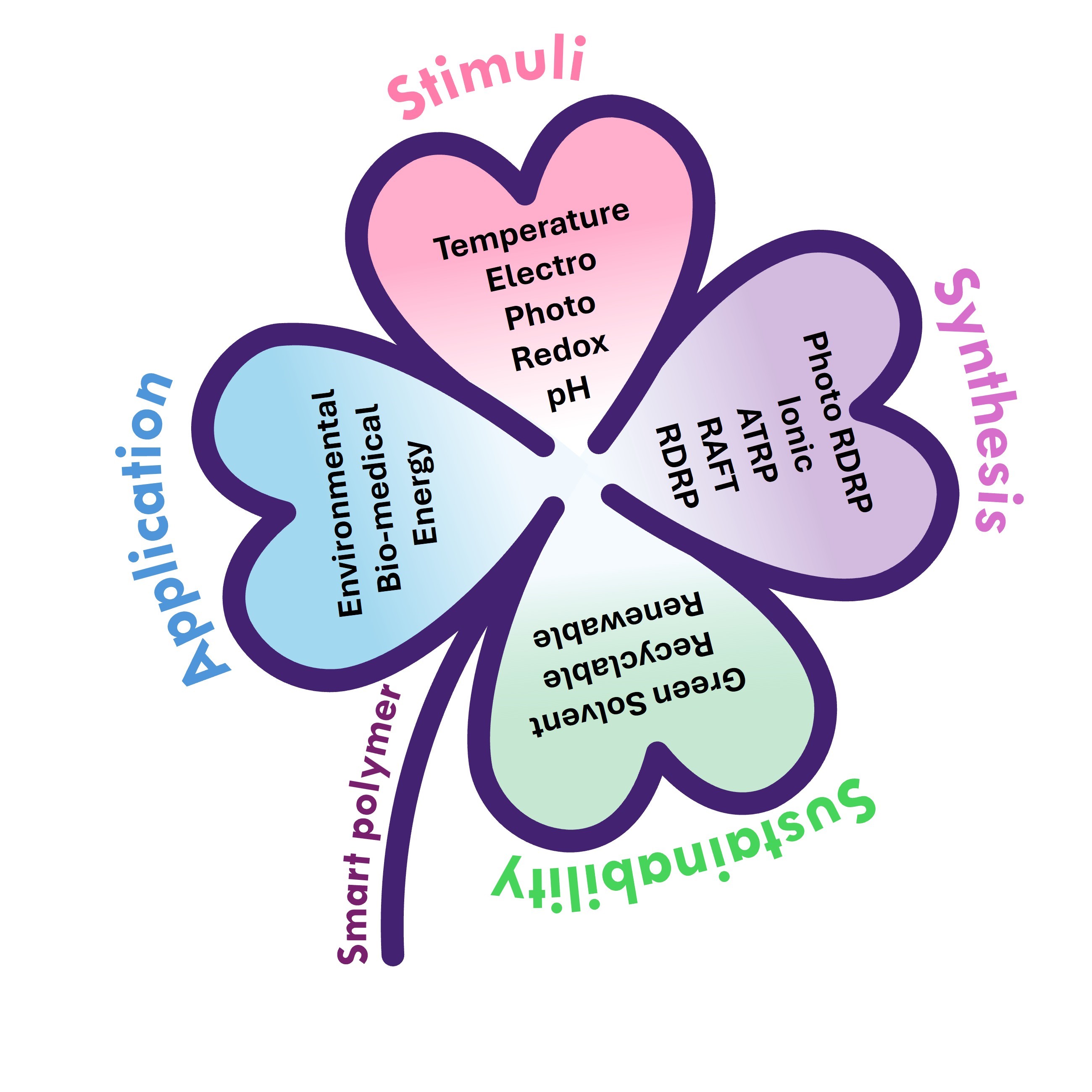
The development of sustainable smart polymers has enabled materials capable of responding to diverse chemical, biological, and physical stimuli. This review highlights recent advances in controlled polymerization techniques-including ATRP, RAFT, RDRP, and photoinduced methods with emphasis on environmentally benign synthesis via green solvents and solvent-free routes. The integration of bio-based monomers, green catalysts, and circular design principles facilitates recyclability, biodegradability, and low toxic impact. Owing to their multifunctional behavior, these polymers exhibit significant potential in drug delivery, tissue engineering, flexible electronics, energy storage, energy conversion, and environmental remediation. Representative examples include thermo-responsive hydrogels, conductive polymer networks, self-healing elastomers, and adaptive separation membranes. Key challenges such as operational stability, scalability, and lifecycle management are discussed, underscoring the need for molecular-to-system level strategies. A holistic approach combining molecular design and circular economy frameworks will accelerate the translation of smart polymers into sustainable, high-performance technologies.
Article Details

This work is licensed under a Creative Commons Attribution 4.0 International License.
How to Cite




References
J. Cui, Y. Li, D. Chen, T. G. Zhan, K. D. Zhang. Ionic liquid‐based stimuli‐responsive functional materials. Adv. Funct. Mater., 2020, 30, 2005522. https://doi.org/10.1002/adfm.202005522
V. A. Ganesh, A. Baji, S. Ramakrishna. Smart functional polymers–a new route towards creating a sustainable environment. RSC Adv., 2014, 4, 53352. https://doi.org/10.1039/C4RA10631H
L. Zhai. Stimuli-responsive polymer films. Chem. Soc. Rev., 2013, 42 (17), 7148. https://doi.org/10.1039/C3CS60023H
J. Deng, J. Li, P. Chen, X. Fang, X. Sun, Y. Jiang, W. Weng, B. Wang, H. Peng. Tunable photothermal actuators based on a pre-programmed aligned nanostructure. J. Am. Chem. Soc., 2016, 138, 225. https://doi.org/10.1021/jacs.5b10131
A. Bhatnagar, S. Wagh, B. Singh, R. Agarwal, F. Khan. Smart materials-a review. Ann. Dent. Spec., 2016, 4, 10.
M. A. C. Stuart, W. T. Huck, J. Genzer, M. Müller, C. Ober, M. Stamm, G. B. Sukhorukov, I. Szleifer, V. V. Tsukruk, M. Urban, Emerging applications of stimuli-responsive polymer materials. Nat. Mater 2010, 9, 101. https://doi.org/10.1038/nmat2614
B. Sahu, S. Maity, A. Jain, S. Banerjee. Next-generation stimuli-responsive polymers for a sustainable tomorrow. Chem. Commun., 2025, 61, 12265. doi.org/10.1038/nmat26148. G. Kocak, C. Tuncer, V. Bütün, pH-Responsive polymers. Polym. Chem., 2017, 8, 144. https://doi.org/10.1039/C6PY01872F
J. Thévenot, H. Oliveira, O. Sandre, S. Lecommandoux. Magnetic responsive polymer composite materials. Chem. Soc. Rev., 2013, 42, 7099. https://doi.org/10.1039/C3CS60058K
J. Hu, S. Liu. Responsive polymers for detection and sensing applications: current status and future developments. Macromolecules 2010, 43, 8315. https://doi.org/10.1021/ma1005815
M. Ma, L. Guo, D. G. Anderson, R. Langer. Bio-inspired polymer composite actuator and generator driven by water gradients. Sci., 2013, 339, 186. https://doi.org/10.1126/science.1230262
D. Parasuraman, M. Serpe. Poly (N-isopropylacrylamide) microgels for organic dye removal from water. ACS Appl. Mater. Interfaces 2011, 3, 2732. https://doi.org/10.1021/am2005288
A. K. Bajpai, S. K. Shukla, S. Bhanu, S. Kankane. Responsive polymers in controlled drug delivery. Prog. Polym. Sci., 2008, 33, 1088. https://doi.org/10.1016/j.progpolymsci.2008.07.005
S. Sharma, Samrat, P. Goyal, K. Dhingra, A. Singh, A. Sarkar, D. Poddar. Shellac: Bridging the gap between chemistry and sustainability—A comprehensive review of its multifunctional coating applications for food, drug, and paper packaging. J. Macromol. Sci. Part A 2024, 61, 691. https://doi.org/10.1080/10601325.2024.2400510
N. Srivastava, A. R. Choudhury. Stimuli-responsive polysaccharide-based smart hydrogels and their emerging applications. Ind. Eng. Chem. Res., 2022, 62, 841. https://doi.org/10.1021/acs.iecr.2c02779
B. Sahu, P. Sinha, B. Mishra, B. P. Tripathi, S. Banerjee. Recyclable Alloy Nanocatalyst-Mediated Photo-Controlled Synthesis of Functional Polymers for Toxic Metal and Dye Removal. ACS Appl. Polym. Mater., 2024, 6, 7237. https://doi.org/10.1021/acsapm.4c01138
D. Kumar, S. Dolui, B. Sahu, S. Banerjee. Multi-stimuli responsive amphiphilic diblock copolymers by a combination of ionic liquid-mediated cationic polymerization and recyclable alloy nanoparticle-mediated photoRDRP. Eur. Polym. J., 2022, 175, 111348. https://doi.org/10.1016/j.eurpolymj.2022.111348
D. K. Sinha, N. Singh, K. Mahata, S. Banerjee. Intelligent Amphiphilic Diblock Copolymer for Dye Removal and Heavy Metal Sensing. ACS Appl. Polym. Mater., 2025, 7, 10430. https://doi.org/10.1021/acsapm.5c01189
O. Nath, A. Jain, K. Mahata, S. Banerjee. Rice Straw‐Derived Activated Carbon/PNIPAM Nanocomposite Hydrogel for Efficient Adsorptive Removal of Synthetic Dyes. ChemNanoMat 2025, 11, e2500237. https://doi.org/10.1002/cnma.202500237
A. Tariq, Z. U. Arif, M. Y. Khalid, M. Hossain, P. I. Rasool, R. Umer, S. Ramakrishna. Recent advances in the additive manufacturing of stimuli‐responsive soft polymers. Adv. Eng. Mater., 2023, 25, 2301074. https://doi.org/10.1002/adem.202301074
B. Sahu, N. Singh, S. Paul, S. Banerjee. Multi‐Responsive 4D‐Printed Soft Active Material toward Shape‐Reconfigurable Actuators. Small 2025, 21, e08079. https://doi.org/10.1002/smll.202508079
N. Singh, P. Sinha, B. Sahu, S. Mandal, S. Bhattacharyya, S. Banerjee. Ultrasmall Sulfur‐Dots‐Mediated Facile Photopolymerization for the Production of Smart Injectable Ink for 3D Printing Applications. Adv. Funct. Mater. 2025, 35, 2415125. https://doi.org/10.1002/adfm.202415125
S. Gong, Y. Lu, J. Yin, A. Levin, W. Cheng. Materials-driven soft wearable bioelectronics for connected healthcare. Chem. Rev., 2024, 124, 455. https://doi.org/10.1021/acs.chemrev.3c00502
S. Dolui, B. Sahu, S. Banerjee. Stimuli‐Responsive Functional Polymeric Materials: Recent Advances and Future Perspectives. Macromol. Chem. Phys., 2025, 226, 2400472. https://doi.org/10.1002/macp.202400472
A. Anastasaki, V. Nikolaou, G. Nurumbetov, P. Wilson, K. Kempe, J. F. Quinn, T. P. Davis, M. R. Whittaker, D. M. Haddleton. Cu (0)-mediated living radical polymerization: a versatile tool for materials synthesis. Chem. Rev., 2016, 116, 835. https://doi.org/10.1021/acs.chemrev.5b00191
K. Matyjaszewski. Atom transfer radical polymerization (ATRP): current status and future perspectives. Macromolecules 2012, 45, 4015. https://doi.org/10.1021/ma3001719
P. Chmielarz, S. Park, A. Simakova, K. Matyjaszewski. Electrochemically mediated ATRP of acrylamides in water. Polymer 2015, 60, 302. https://doi.org/10.1016/j.polymer.2015.01.051
S. Yamago. Precision polymer synthesis by degenerative transfer controlled/living radical polymerization using organotellurium, organostibine, and organobismuthine chain-transfer agents. Chem. Rev., 2009, 109, 5051. https://doi.org/10.1021/cr9001269
G. Moad. RAFT polymerization to form stimuli-responsive polymers. Polym. Chem., 2017, 8, 177.
J. Nicolas, Y. Guillaneuf, C. Lefay, D. Bertin, D. Gigmes, B. Charleux. Nitroxide-mediated polymerization. Prog. Polym. Sci., 2013, 38, 63. https://doi.org/10.1016/j.progpolymsci.2012.06.002
G. David, C. Boyer, J. Tonnar, B. Ameduri, P. Lacroix-Desmazes, B. Boutevin. Use of iodocompounds in radical polymerization. Chem. Rev., 2006, 106, 3936. https://doi.org/10.1021/cr0509612
V. S. Damani, L. V. Kayser. Stimuli-Responsive Conductive Polymers for Bioelectronics. Chem. Mater., 2025, 37, 4537. https://doi.org/10.1021/acs.chemmater.5c00495
M. R. Aguilar, J. San Román. Introduction to smart polymers and their applications. In Smart polymers and their applications, Elsevier: 2019, pp 1-11. https://doi.org/10.1533/9780857097026.1
H. Yang, H. Zhu, M. M. R. M. Hendrix, N. J. H. G. M. Lousberg, G. de With, A. C. C. Esteves, J. H. Xin. Temperature‐Triggered Collection and Release of Water from Fogs by a Sponge‐Like Cotton Fabric. Adv. Mater., 2013, 25, 1149. https://doi.org/10.1002/adma.201204278
D. Schmaljohann. Thermo-and pH-responsive polymers in drug delivery. Adv. Drug Deliv. Rev., 2006, 58, 1655. https://doi.org/10.1016/j.addr.2006.09.020
N. Zhang, S. Salzinger, B. Rieger. Poly (vinylphosphonate) s with widely tunable LCST: a promising alternative to conventional thermoresponsive polymers. Macromolecules 2012, 45, 9751. https://doi.org/10.1021/ma3019014
X.-Y. Liu, F. Cheng, Y. Liu, H. -J. Liu, Y. Chen. Preparation and characterization of novel thermoresponsive gold nanoparticles and their responsive catalysis properties. J. Mater. Chem., 2010, 20, 360. https://doi.org/10.1039/B915313F
B. Xue, L. Gao, Y. Hou, Z. Liu, L. Jiang. Temperature controlled water/oil wettability of a surface fabricated by a block copolymer: application as a dual water/oil on-off switch. Adv. Mater., 2012, 25, 273. https://doi.org/10.1002/adma.201202799
N. Singh, D. K. Sinha, K. Mahata, D. Bhoi, T. Dewangan, K. Nanaji, S. Banerjee. Development of Multifunctional Smart Polymeric Material for Emerging Applications. Adv. Funct. Mater., 2025, e10516. https://doi.org/10.1002/adfm.202510516
O. Confortini, F. E. Du Prez, Functionalized Thermo‐Responsive Poly (vinyl ether) by Living Cationic Random Copolymerization of Methyl Vinyl Ether and 2‐Chloroethyl Vinyl Ether. Macromol. Chem. Phys., 2007, 208, 1871. https://doi.org/10.1002/macp.200700205
R. Hoogenboom. Poly (2‐oxazoline)s: A Polymer Class with Numerous Potential Applications. Angew. Chem. Int. Ed., 2009, 48, 7978. https://doi.org/10.1002/anie.200901607
P. M. Mendes. Stimuli-responsive surfaces for bio-applications. Chem. Soc. Rev., 2008, 37, 2512. https://doi.org/10.1039/B714635N
H. Palza, P. A. Zapata, C. Angulo-Pineda. Electroactive smart polymers for biomedical applications. Materials 2019, 12, 277. https://doi.org/10.3390/ma12020277
D. P. Jones, J. L. Carlson, P. S. Samiec, P. Sternberg Jr, V. C. Mody Jr, R. L. Reed, L. A. S. Brown. Glutathione measurement in human plasma: evaluation of sample collection, storage and derivatization conditions for analysis of dansyl derivatives by HPLC. Clin. Chim. Acta 1998, 275, 175. https://doi.org/10.1016/S0009-8981(98)00089-8
J. H. Ha, J. H. Lim, J. M. Lee, B. G. Chung. Electro-responsive conductive blended hydrogel patch. Polymers 2023, 15, 2608. https://doi.org/10.3390/polym15122608
S. Dolui, B. Sahu, S. Banerjee. Stimuli-Responsive Functional Polymeric Materials: Recent Advances and Future Perspectives. Macromol. Chem. Phys., 2025, 226, 2400472. https://doi.org/10.1002/macp.202400472
Y. Shiraishi, R. Miyamoto, T. Hirai. Spiropyran-conjugated thermoresponsive copolymer as a colorimetric thermometer with linear and reversible color change. Org. Lett., 2009, 11, 1571. https://doi.org/10.1021/ol900188m
C. Pietsch, U. S. Schubert, R. Hoogenboom. Aqueous polymeric sensors based on temperature-induced polymer phase transitions and solvatochromic dyes. Chem. Commun. 2011, 47, 8750. https://doi.org/10.1039/C1CC11940K
Z. Mahimwalla, K. G. Yager, J. -i. Mamiya, A. Shishido, A. Priimagi, C. J. Barrett. Azobenzene photomechanics: prospects and potential applications. Polym. Bull., 2012, 69, 967. https://doi.org/10.1007/s00289-012-0792-0
Y. Huang, W. Liang, J. K. Poon, Y. Xu, R. K. Lee, A. Yariv. Spiro-oxazine photochromic fiber optical switch. Appl. Phys. Lett., 2006, 88, 181102. https://doi.org/10.1063/1.2200148
M. Clerc, S. Sandlass, O. Rifaie-Graham, J. A. Peterson, N. Bruns, J. R. de Alaniz, L. F. Boesel. Visible light-responsive materials: the (photo) chemistry and applications of donor–acceptor Stenhouse adducts in polymer science. Chem. Soc. Rev., 2023, 52, 8245. https://doi.org/10.1039/D3CS00508A
F. Xu, B. L. Feringa. Photoresponsive supramolecular polymers: from light‐controlled small molecules to smart materials. Adv. Mater., 2023, 35, 2204413. https://doi.org/10.1002/adma.202204413
S. P. Nunes, A. R. Behzad, B. Hooghan, R. Sougrat, M. Karunakaran, N. Pradeep, U. Vainio, K. -V. Peinemann. Switchable pH-responsive polymeric membranes prepared via block copolymer micelle assembly. ACS nano 2011, 5, 3516. https://doi.org/10.1021/nn200484v
S. Dolui, B. Sahu, S. A. Mohammad, S. Banerjee. Multi-stimuli responsive sequence defined multi-arm star diblock copolymers for controlled drug release. JACS Au 2023, 3, 2117. https://doi.org/10.1021/jacsau.3c00339
P. Schattling, F. D. Jochum, P. Theato. Multi-stimuli responsive polymers–the all-in-one talents. Polym. Chem., 2014, 5, 25. https://doi.org/10.1039/C3PY00880K
G. Li, S. Song, L. Guo, S. Ma. Self‐assembly of thermo‐and pH‐responsive poly (acrylic acid)‐b‐poly (N‐isopropylacrylamide) micelles for drug delivery. J. Polym. Sci. A Polym. Chem., 2008, 46, 5028. https://doi.org/10.1002/pola.22831
B. Sahu, S. Paul, P. Sinha, S. Banerjee. Metal‐Free Sulfur‐Dots Induced Spatiotemporal PhotoRDRP for Multi‐Arm Star Functional Polymer. Angew. Chem., 2025, 64, e202512380. https://doi.org/10.1002/anie.202512380
S. Dai, P. Ravi, K. C. Tam. pH-Responsive polymers: synthesis, properties and applications. Soft Matter 2008, 4, 435. https://doi.org/10.1039/B714741D
K. Oyaizu, H. Nishide. Radical polymers for organic electronic devices: a radical departure from conjugated polymers? Adv. Mater., 2009, 21, 2339. https://doi.org/10.1002/adma.200803554
H. Logtenberg, W. R. Browne. Electrochemistry of dithienylethenes and their application in electropolymer modified photo-and redox switchable surfaces. Org. Biomol. Chem., 2013, 11, 233. https://doi.org/10.1039/C2OB26723C
D. J. Phillips, M. I. Gibson. Degradable thermoresponsive polymers which display redox-responsive LCST Behaviour. Chem. Commun., 2012, 48, 1054. https://doi.org/10.1039/C1CC16323J
Z. Xu, K. M. A. Uddin, L. Ye. Boronic acid terminated thermo-responsive and fluorogenic polymer: controlling polymer architecture for chemical sensing and affinity separation. Macromolecules 2012, 45, 6464. https://doi.org/10.1021/ma301213f
D. Kumar, B. Sahu, S. Dolui, S. S. Rajput, M. M. Alam, S. Banerjee. Multi-stimuli responsive boronic acid-containing polymers via recyclable nanoscale zerovalent iron (nZVI)-mediated photoRDRP in ionic liquid. Eur. Polym. J., 2023, 199, 112443. https://doi.org/10.1016/j.eurpolymj.2023.112443
Z. Guo, Y. Feng, Y. Wang, J. Wang, Y. Wu, Y. Zhang. A novel smart polymer responsive to CO2. Chem. Commun., 2011, 47, 9348. https://doi.org/10.1039/C1CC12388B
Q. Dai, A. Nelson. Magnetically-responsive self assembled composites. Chem. Soc. Rev., 2010, 39, 4057. https://doi.org/10.1039/B812669K
C. Sanson, O. Diou, J. Thevenot, E. Ibarboure, A. Soum, A. Brûlet, S. Miraux, E. Thiaudière, S. Tan, A. Brisson, V. Dupuis, O. Sandre, S. Lecommandoux. Doxorubicin loaded magnetic polymersomes: theranostic nanocarriers for MR imaging and magneto-chemotherapy. ACS nano 2011, 5, 1122. https://doi.org/10.1021/nn102762f
R. Hoogenboom. Poly (2‐oxazoline) s: a polymer class with numerous potential applications. Angew. Chem. Int. Ed., 2009, 48, 7978. https://doi.org/10.1002/anie.200901607
C. Pietsch, U. S. Schubert, R. Hoogenboom. Aqueous polymeric sensors based on temperature-induced polymer phase transitions and solvatochromic dyes. Chem. Commun., 2011, 47, 8750. https://doi.org/10.1039/C1CC11940K
J. H. Ha, J. H. Lim, J. M. Lee, B. G. Chung. Electro-responsive conductive blended hydrogel patch. Polymers 2023,15, 2608. https://doi.org/10.3390/polym15122608
B. Sahu, S. Paul, P. Sinha, S. Banerjee. Metal‐Free Sulfur‐Dots Induced Spatiotemporal PhotoRDRP for Multi‐Arm Star Functional Polymer. Angew. Chem. Int. Ed., 2025, 64, e202512380. https://doi.org/10.1002/anie.202512380
S. Maity, N. Singh, S. Banerjee. Bio-emulated design of self-healing elastomers with superior vibration damping and impact-resilient stiffening. Chem. Eng. J., 2025, 513, 163005. https://doi.org/10.1016/j.cej.2025.163005
Y. Gao, D. Zhou, J. Lyu, S. A, Q. Xu, B. Newland, K. Matyjaszewski, H. Tai, W. Wang, Complex polymer architectures through free-radical polymerization of multivinyl monomers. Nat. Rev. Chem., 2020, 4, 194. https://doi.org/10.1038/s41570-020-0170-7
S. Maity, N. Singh, S. Banerjee. Bio-emulated design of self-healing elastomers with superior vibration damping and impact-resilient stiffening. Chem. Eng. J., 2025, 513, 163005. https://doi.org/10.1016/j.cej.2025.163005
C. Wang, F. Du, H. Xie, H. Zhang, E. Chen, Q. Zhou. Novel semirigid water-soluble thermoresponsive polymers based on mesogen-jacketed liquid crystal polymers. Chem. Commun., 2010, 46, 3155. https://doi.org/10.1039/B923107B
W. S. Ng, E. Forbes, G. V. Franks, L. A. Connal. Xanthate-functional temperature-responsive polymers: effect on lower critical solution temperature behavior and affinity toward sulfide surfaces. Langmuir 2016, 32, 7443. https://doi.org/10.1021/acs.langmuir.6b00211
T. Pintauer, K. Matyjaszewski. Atom transfer radical addition and polymerization reactions catalyzed by ppm amounts of copper complexes. Chem. Soc. Rev., 2008, 37, 1087. https://doi.org/10.1039/B714578K
J. -S. Wang, K. Matyjaszewski. Controlled/" living" radical polymerization. atom transfer radical polymerization in the presence of transition-metal complexes. J. Am. Chem. Soc., 1995, 117, 5614. https://doi.org/10.1021/ja00125a035
A. J. Magenau, N. C. Strandwitz, A. Gennaro, K. Matyjaszewski. Electrochemically mediated atom transfer radical polymerization. Science 2011, 332, 81. https://doi.org/10.1126/science.120235
H. Mohapatra, M. Kleiman, A. P. Esser-Kahn. Mechanically controlled radical polymerization initiated by ultrasound. Nature Chem 2017, 9, 135. https://doi.org/10.1038/nchem.2633
S. Dadashi-Silab, F. Lorandi, M. Fantin, K. Matyjaszewski, Redox-switchable atom transfer radical polymerization. Chem. Commun., 2019, 55, 612. https://doi.org/10.1039/C8CC09209E
E. Frick, A. Anastasaki, D. M. Haddleton, C. Barner-Kowollik. Enlightening the mechanism of copper mediated photoRDRP via high-resolution mass spectrometry. J. Am. Chem. Soc., 2015, 137, 6889. https://doi.org/10.1021/jacs.5b03048
S. A. Mohammad, S. Dolui, D. Kumar, M. M. Alam, S. Banerjee. Anisotropic and Self‐Healing Copolymer with Multiresponsive Capability via Recyclable Alloy‐Mediated RDRP. Macromol. Rapid Commun., 2021, 42, 2100096. https://doi.org/10.1002/marc.202100096
M. R. Hill, R. N. Carmean, B. S. Sumerlin. Expanding the Scope of RAFT Polymerization: Recent Advances and New Horizons. Macromolecules 2015, 48, 5459. https://doi.org/10.1021/acs.macromol.5b00342
Y. Lee, C. Boyer, M. S. Kwon. Photocontrolled RAFT polymerization: past, present, and future. Chem. Soc. Rev., 2023, 52, 3035. https://doi.org/10.1039/D1CS00069A.
D. Kumar, S. Dolui, B. Sahu, S. Banerjee. Multi-stimuli responsive amphiphilic diblock copolymers by a combination of ionic liquid-mediated cationic polymerization and recyclable alloy nanoparticle-mediated photoRDRP. Eur. Polym. J., 2022, 175, 111348. https://doi.org/10.1016/j.eurpolymj.2022.111348
S. Dolui, B. Sahu, D. Kumar, S. Banerjee. Facile access to redox responsive self-healing coating materials via living cationic block copolymerization of styrene and 2-chloroethyl vinyl ether. Eur. Polym. J., 2023, 196, 112251. https://doi.org/10.1016/j.eurpolymj.2023.112251
L. Yang, J. Xu, J. Wang, F. Lang, B. Liu, Z. Yang. Responsive single-chain/colloid composite Janus nanoparticle. Macromolecules 2020, 53, 2264. https://doi.org/10.1021/acs.macromol.0c00109
S. A. Mohammad, S. Dolui, D. Kumar, S. R. Mane, S. Banerjee. l-Histidine-Derived smart antifouling biohybrid with multistimuli responsivity. Biomacromolecules 2021, 22, 3941. https://doi.org/10.1021/acs.biomac.1c00748
J. -S. Wang, K. Matyjaszewski, Controlled/"living" radical polymerization. atom transfer radical polymerization in the presence of transition-metal complexes. J. Am. Chem. Soc., 1995, 117, 5614. https://doi.org/10.1021/ja00125a035
D. Kumar, S. Dolui, B. Sahu, S. Banerjee. Multi-stimuli responsive amphiphilic diblock copolymers by a combination of ionic liquid-mediated cationic polymerization and recyclable alloy nanoparticle-mediated photoRDRP. Eur. Polym. J., 2022, 175, 111348. https://doi.org/10.1016/j.eurpolymj.2022.111348
S. Dolui, B. Sahu, D. Kumar, S. Banerjee. Facile access to redox responsive self-healing coating materials via living cationic block copolymerization of styrene and 2-chloroethyl vinyl ether. Eur. Polym. J., 2023, 196, 112251. https://doi.org/10.1016/j.eurpolymj.2023.112251
G. W. Coates, Y. D. Getzler. Chemical recycling to monomer for an ideal, circular polymer economy. Nat. Rev. Mater., 2020, 5, 501. https://doi.org/10.1038/s41578-020-0190-4
K. Syberg, M. B. Nielsen, N. B. Oturai, L. P. W. Clausen, T. M. Ramos, S. F. Hansen. Circular economy and reduction of micro (nano) plastics contamination. J. Hazard. Mater. Adv., 2022, 5, 100044. https://doi.org/10.1016/j.hazadv.2022.100044
K. G. Harding, J. Dennis, H. Von Blottnitz, S. T. Harrison. Environmental analysis of plastic production processes: Comparing petroleum-based polypropylene and polyethylene with biologically-based poly-β-hydroxybutyric acid using life cycle analysis. J. Biotechnol., 2007, 130, 57. https://doi.org/10.1016/j.jbiotec.2007.02.012
R. Geyer, J. R. Jambeck, K. L. Law. Production, use, and fate of all plastics ever made. Sci. Adv., 2017, 3, e1700782. https://doi.org/10.1126/sciadv.1700782
A. L. Andrady, M. A. Neal. Applications and societal benefits of plastics. Philos. Trans. R. Soc. Lond. B Biol. Sci., 2009, 364, 1977. https://doi.org/10.1098/rstb.2008.0304
B. von Vacano, H. Mangold, G. W. Vandermeulen, G. Battagliarin, M. Hofmann, J. Bean, A. Künkel. Sustainable design of structural and functional polymers for a circular economy. Angew. Chem. Int. Ed., 2023, 62, e202210823. https://doi.org/10.1002/anie.202210823
P. T. Anastas, J. C. Warner. Green Chemistry: Theory and Practice. Oxford University Press: 2000. https://doi.org/10.1093/oso/9780198506980.001.0001
S. Bharati, V. L. Gaikwad. Biodegradable Polymers in Food Packaging. In Handbook of Biodegradable Polymers, Jenny Stanford Publishing, 2024; pp 683-743.
H. Casajus, E. Dubreucq, S. Tranchimand, V. Perrier, C. Nugier-Chauvin, S. Cammas-Marion. Lipase-Catalyzed Ring-Opening Polymerization of Benzyl Malolactonate: An Unusual Mechanism? Biomacromolecules 2020, 21, 2874. https://doi.org/10.1021/acs.biomac.0c00593
C. Liao, T. Li, F. Chen, S. Yan, L. Zhu, H. Tang, D. Wang, Horseradish peroxidase-catalyzed polyacrylamide gels: monitoring their polymerization with BSA-stabilized gold nanoclusters and their functional validation in electrophoresis. RSC Adv., 2024, 14, 2182. https://doi.org/10.1039/D3RA07208H
L. Wang, L. Tan, L. Hu, X. Wang, R. Koppolu, T. Tirri, B. van Bochove, P. Ihalainen, L. S. S. Sobhanadhas, J. V. Seppälä, S. Willför, M. Toivakka, C. Xu. On laccase-catalyzed polymerization of biorefinery lignin fractions and alignment of lignin nanoparticles on the nanocellulose surface via one-pot water-phase synthesis. ACS Sustain. Chem. Eng., 2021, 9, 8770. https://doi.org/10.1021/acssuschemeng.1c01576
M. Valle, M. Ximenis, X. Lopez de Pariza, J. M. W. Chan, H. Sardon. Spotting Trends in Organocatalyzed and Other Organomediated (De)polymerizations and Polymer Functionalizations. Angew. Chem., Int. Ed., 2022, 61, e202203043. https://doi.org/10.1002/anie.202203043
X. Geng, X. Liu, Q. Yu, C. Zhang, X. Zhang. Advancing H-bonding organocatalysis for ring-opening polymerization: intramolecular activation of initiator/chain end. J. Am. Chem. Soc., 2024, 146, 25852. https://doi.org/10.1021/jacs.4c09394
A. Jain, B. Sahu, N. Ingale, S. Banerjee. Recoverable catalyst-mediated temporal controlled photoinduced RDRP in ionic liquids. Eur. Polym. J., 2025, 228, 113839. https://doi.org/10.1016/j.eurpolymj.2025.113839
A. Jain, B. Sahu, N. Ingale, S. Banerjee. Toward a Greener Tomorrow: Sustainable Synthesis of Well-defined Polymers in Ionic Liquids via Recyclable Nanocatalyst-Mediated Photopolymerization. Sus. Circ. NOW 2025, 2, a25297304. (continuous publication). https://doi.org/10.1055/a-2529-7304
H. Li, H. A. Aguirre-Villegas, R. D. Allen, X. Bai, C. H. Benson, G. T. Beckham, S. L. Bradshaw, J. L. Brown, R. C. Brown, V. S. Cecon, J. B. Curley, G. W. Curtzwiler, S. Dong, S. Gaddameedi, J. E. García, I. Hermans, M. S. Kim, J. Ma, L. O. Mark, M. Mavrikakis, O. O. Olafasakin, T. A. Osswald, K. G. Papanikolaou, H. Radhakrishnan, M. A. Sanchez Castillo, K. L. Sánchez-Rivera, K. N. Tumu, R. C. Van Lehn, K. L. Vorst, M. M. Wright, J. Wu, V. M. Zavala, P. Zhou, G. W. Huber. Expanding plastics recycling technologies: chemical aspects, technology status and challenges. Green Chem., 2022, 24, 8899. https://doi.org/10.1039/D2GC02588D
W. Kaminsky, B. Schlesselmann, C. M. Simon. Thermal degradation of mixed plastic waste to aromatics and gas. Polym. Degrad. Stabil., 1996, 53, 189. https://doi.org/10.1016/0141-3910(96)00087-0
P. Sinha, S. Paul, S. Maity, S. Banerjee. Selective Depolymerization of Poly(ethylene terephthalate) in Mixed Plastic Waste Using Magnetically Recoverable nZVI Catalyst. Environ. Sci. Technol., 2025, 59, 15766. https://doi.org/10.1021/acs.est.5c06820
R. Elsayed, Y. H. Teow. Advanced functional polymer materials for biomedical applications. J. Appl. Polym. Sci., 2025, 142, e56391. https://doi.org/10.1002/app.56391
T. Bera, S. Vincent, S. Mohanty. Effect of carboxymethylated chitosan and cellulose acetate on mechanical properties of PLA blends for biomedical applications. J. Macromol. Sci. Part A 2024, 61, 822. https://doi.org/10.1080/10601325.2024.2404098
S. R. Dachani, A. Vashi, A. B. Mundada, P. A. Mundada, S. R. S. Rudrangi, S. Rudrangi, R. Tiwari. Innovative polymers in pharmaceutical chemistry: revolutionizing drug delivery systems. Polym.-Plast. Technol. Mater., 2025, 64, 911. https://doi.org/10.1080/25740881.2024.2440531
S. Kayal, P. Kola, J. Pal, M. Mandal, D. Dhara. Micellar self-assembly from pH-responsive polymer prodrug for targeted antitumor drug transportation. J. Macromol. Sci. Part A 2025, 62, 441. https://doi.org/10.1080/10601325.2025.2487833
H. Zhang, Y. Mu, C. Han, Y. Zhou. Multi‐Responsive Molecularly Imprinted Polymer Nanocapsules as Biological Environment‐Adaptable Drug Carriers for Efficient Cancer Therapy. Small 2025, 21, 2412303. https://doi.org/10.1002/smll.202412303
A. R. Pereira, P. C. Pires, H. Hameed, D. Lopes, J. Lopes, I. Sousa-Oliveira, S. Babaie, P. Mazzola, F. Veiga, A. C. Paiva-Santos. Injectable nanocomposite hydrogels for targeted intervention in cancer, wound healing, and bone and myocardial tissue engineering. Drug Deliv. Transl. Res., 2025, 15, 2994. https://doi.org/10.1007/s13346-025-01864-2
M. Ovezova, F. Yılmaz, I. Göktürk, K. Ç. Güler, A. Denizli. Molecularly imprinted polymers for pharmaceutical and biomedical analysis. J. Pharm. Biomed. Anal. Open 2024, 4, 100038. https://doi.org/10.1016/j.jpbao.2024.100038
D. Oliveira, Y. R. Barcelay, F. T. Moreira. An electrochemically synthesized molecularly imprinted polymer for highly selective detection of breast cancer biomarker CA 15-3: a promising point-of-care biosensor. RSC Adv., 2024, 14, 15347. https://doi.org/10.1039/D4RA02051K
P. Kumar, D. Patra, R. Halder, R. Shunmugam. Engineered 1,6-heptadiynes based polymeric prodrug system for anticancer drug delivery. J. Macromol. Sci. Part A 2024, 61, 993. https://doi.org/10.1080/10601325.2024.2418851
J. Bai, Y. Zhang, L. Chen, H. Yan, C. Zhang, L. Liu, X. Xu. Synthesis and characterization of paclitaxel-imprinted microparticles for controlled release of an anticancer drug. Mater. Sci. Eng. C., 2018, 92, 338. https://doi.org/10.1016/j.msec.2018.06.062
J. Liu, C. Du, W. Huang, Y. Lei. Injectable smart stimuli-responsive hydrogels: pioneering advancements in biomedical applications. Biomater. Sci., 2024, 12, 8. https://doi.org/10.1039/D3BM01352A
Z. Hou, W. Yan, T. Li, W. Wu, Y. Cui, X. Zhang, Y. -P. Chen, T. Yin, J. Qiu, G. Wang. Lactic acid-mediated endothelial to mesenchymal transition through TGF-β1 contributes to in-stent stenosis in poly-L-lactic acid stent. Int. J. Biol. Macromol., 2020, 155, 1589. https://doi.org/10.1016/j.ijbiomac.2019.11.136
Q. Pan, W. Su, Y. Yao. Progress in microsphere-based scaffolds in bone/cartilage tissue engineering. Biomed. Mater., 2023, 18, 062004. https://doi.org/10.1088/1748-605X/acfd78
M. -L. Zhang, J. Cheng, Y. -C. Xiao, R. -F. Yin, X. Feng. Raloxifene microsphere-embedded collagen/chitosan/β-tricalcium phosphate scaffold for effective bone tissue engineering. Int. J. Pharm., 2017, 518, 80. https://doi.org/10.1016/j.ijpharm.2016.12.031
Q. Song, D. Wang, H. Li, Z. Wang, S. Sun, Z. Wang, Y. Liu, S. Lin, G. Li, S. Zhang, P. Zhang. Dual-response of multi-functional microsphere system to ultrasound and microenvironment for enhanced bone defect treatment. Bioact. Mater., 2024, 32, 304. https://doi.org/10.1016/j.bioactmat.2023.10.007
C. -P. Guan, M. -N. Zhou, A. -E. Xu, K. -F. Kang, J. -F. Liu, X. -D. Wei, Y. -W. Li, D. -K. Zhao, W. -S. Hong. The skin: an indispensable barrier. Exp. Dermatol., 2008, 17, 1059. https://doi.org/10.1111/j.1600-0625.2008.00786.x
C. L. Simpson, D. M. Patel, K. J. Green. Deconstructing the skin: cytoarchitectural determinants of epidermal morphogenesis. Nat. Rev. Mol. Cell Biol., 2011, 12, 565. https://doi.org/10.1038/nrm3175
Z. Gao, X. Li, Y. Jiang, B. Lu, G. Zhang, W. Huang, Y. Li, Y. Zhang. Bioactive Hydrogel Dressing with Inherent Antimicrobial and Antioxidant Activity for Wound Healing. Biomacromolecules 2025, 26, 6091. https://doi.org/10.1021/acs.biomac.5c01041
J. Xu, D. Zou, E. Dong, X. Jiang, S. Xu, Y. Xiao, W. Gong, Y. Xu, Z. Zeng, K. Deng. Biomedical Engineering on Smart Polymeric Nanoparticle–Hydrogel Platforms for Efficient Antibiotic Delivery against Bacterial-Infected Wounds. ACS Biomater. Sci. Eng., 2025, 11, 4166. https://doi.org/10.1021/acsbiomaterials.4c02045
S. Moradi, F. Nargesi Azam, H. Abdollahi, N. Rajabifar, A. Rostami, P. Guzman, P. Zarrintaj, S. M. Davachi. Graphene-based polymeric microneedles for biomedical applications: a comprehensive review. ACS Appl. Bio Mater., 2025, 8, 1835. https://doi.org/10.1021/acsabm.4c01884
W. Zhang, Q. Zhang, H. Zhao, Y. Yu, Y. Liu, N. Gu, W. Cheng. Adaptive Nanoplasmonics Controlled by Soft Polymers. ACS Appl. Mater. Interfaces 2025, 17, 46463. https://doi.org/10.1021/acsami.5c07664
L. Xi, Y. Shang, Z. Wang, J. Wang, Q. Wu, Y. Shen, Y. Ding. Programmable DNA hydrogels for biosensing and point-of-care test. Coord. Chem. Rev., 2024, 518, 216084. https://doi.org/10.1016/j.ccr.2024.216084
M. Fatkullin, V. Menzelintsev, A. Lipovka, E. Dogadina, E. Plotnikov, K. Brazovskiy, S. Li, L. Ma, C. Cheng, E. Porokhova. Smart graphene textiles for biopotential monitoring: laser-tailored electrochemical property enhancement. ACS Sens., 2024, 9, 1809. https://doi.org/10.1021/acssensors.3c02361
I. Oladele, S. Adelani, A. Taiwo, I. Akinbamiyorin, O. Olanrewaju, A. Orisawayi. Polymer-based nanocomposites for supercapacitor applications: a review on principles, production and products. RSC Adv., 2025, 15, 7509. https://doi.org/10.1039/D4RA08601E
P. Molaiyan, S. Bhattacharyya, G. S. dos Reis, R. Sliz, A. Paolella, U. Lassi. Towards greener batteries: sustainable components and materials for next-generation batteries. Green Chem., 2024, 26, 7508. https://doi.org/10.1039/D3GC05027K
E. E. Perry, C. -Y. Chiu, K. Moudgil, R. A. Schlitz, C. J. Takacs, K. A. O’Hara, J. G. Labram, A. M. Glaudell, J. B. Sherman, S. Barlow, C. J. Hawker, S. R. Marder, M. L. Chabinyc. High conductivity in a nonplanar n-doped ambipolar semiconducting polymer. Chem. Mat., 2017, 29, 9742. https://doi.org/10.1021/acs.chemmater.7b03516
C. R. Mulzer, L. Shen, R. P. Bisbey, J. R. McKone, N. Zhang, H. D. Abruña, W. R. Dichtel. Superior charge storage and power density of a conducting polymer-modified covalent organic framework. ACS Cent. Sci., 2016, 2, 667. https://doi.org/10.1021/acscentsci.6b00220
Z. Roohi, F. Mighri, Z. Zhang. Conductive polymer-based electrodes and supercapacitors: Materials, electrolytes, and characterizations. Materials 2024, 17, 4126. https://doi.org/10.3390/ma17164126
X. Jiao, A. V. Kirianova, X. Xu, O. O. Kapitanova, V. A. Krivchenko, F. S. Napolskiy, V. S. Volkov, M. O. Gallyamov, Y. Liu. Conductive additives for improving the rate capability of cathode materials in secondary lithium batteries. ACS Appl. Energy Mater., 2023, 6, 2855. https://doi.org/10.1021/acsaem.2c03772
R. Dong, M. Yang, Y. Zuo, L. Liang, H. Xing, X. Duan, S. Chen. Conducting Polymers-Based Gas Sensors: Principles, Materials, and Applications. Sensors 2025, 25, 2724. https://doi.org/10.3390/s25092724
T. Nezakati, A. Seifalian, A. Tan, A. M. Seifalian. Conductive Polymers: Opportunities and Challenges in Biomedical Applications. Chem. Rev., 2018, 118, 6766. https://doi.org/10.1021/acs.chemrev.6b00275
Z. Xu, Z. Zhang, H. Yin, S. Hou, H. Lin, J. Zhou, S. Zhuo. Investigation on the role of different conductive polymers in supercapacitors based on a zinc sulfide/reduced graphene oxide/conductive polymer ternary composite electrode. RSC Adv., 2020, 10, 3122. https://doi.org/10.1039/C9RA07842H
J. Li, W. Lu, Y. Yan, T. -W. Chou. High performance solid-state flexible supercapacitor based on Fe3O4/carbon nanotube/polyaniline ternary films. J. Mater. Chem. A 2017, 5, 11271. https://doi.org/10.1039/C7TA02008B
X. Guan, L. Pan, Z. Fan. Flexible, transparent and highly conductive polymer film electrodes for all-solid-state transparent supercapacitor applications. Membranes 2021, 11, 788. https://doi.org/10.3390/membranes11100788
M. Taj, V. S. Bhat, G. Sriram, M. Kurkuri, S. Manohara, P. D. Padova, G. Hegde. PEDOT-doped mesoporous nanocarbon electrodes for high capacitive aqueous symmetric supercapacitors. Nanomaterials 2024, 14, 1222. https://doi.org/10.3390/nano14141222
S. Muench, A. Wild, C. Friebe, B. Haupler, T. Janoschka, U. S. Schubert. Polymer-based organic batteries. Chem. Rev., 2016, 116, 9438. https://doi.org/10.1021/acs.chemrev.6b00070
Y. Hu, L. Yu, T. Meng, S. Zhou, X. Sui, X. Hu. Hybrid ionogel electrolytes for advanced lithium secondary batteries: developments and challenges. Chem. Asian J., 2022, 17, e202200794. https://doi.org/10.1002/asia.202200794
C. Yan, R. Xu, Y. Xiao, J. F. Ding, L. Xu, B. Q. Li, J. Q. Huang. Toward critical electrode/electrolyte interfaces in rechargeable batteries. Adv. Funct. Mater., 2020, 30, 1909887. https://doi.org/10.1002/adfm.201909887
Z. Chen, K. Wang, P. Pei, Y. Zuo, M. Wei, H. Wang, P. Zhang, N. Shang. Advances in electrolyte safety and stability of ion batteries under extreme conditions. Nano Res., 2023, 16, 2311. https://doi.org/10.1007/s12274-022-4871-x
C. Li, K. Zhang, X. Cheng, J. Li, Y. Jiang, P. Li, B. Wang, H. Peng. Polymers for flexible energy storage devices. Prog. Polym. Sci., 2023, 143, 101714. https://doi.org/10.1016/j.progpolymsci.2023.101714
M. S. Ahmed, M. Islam, B. Raut, S. Yun, H. Y. Kim, K. -W. J. G. Nam. A comprehensive review of functional gel polymer electrolytes and applications in lithium-ion battery. Gels 2024, 10, 563. https://doi.org/10.3390/gels10090563
J. Peng, D. Walter, Y. Ren, M. Tebyetekerwa, Y. Wu, T. Duong, Q. Lin, J. Li, T. Lu, M. A. Mahmud, O. L. C. Lem, S. Zhao, W. Liu, Y. Liu, H. Shen, L. Li, F. Kremer, H. T. Nguyen, D. -Y. Choi, K. J. Weber, K. R. Catchpole, T. P. White. Nanoscale localized contacts for high fill factors in polymer-passivated perovskite solar cells. Science 2021, 371, 390. https://doi.org/10.1126/science.abb868
Z. Wang, X. Wang, S. Wang, J. He, T. Zhang, J. Wang, G. Wu. Simultaneously enhanced thermal conductivity and dielectric breakdown strength in sandwich AlN/epoxy composites. Nanomaterials 2021, 11, 1898. https://doi.org/10.3390/nano11081898
S. Nie, F. Qin, Y. Liu, C. Qiu, Y. Jin, H. Wang, L. Liu, L. Hu, Z. Su, J. Song. High conductivity, semiconducting, and metallic PEDOT: PSS electrode for all-plastic solar cells. Molecules 2023, 28, 2836. https://doi.org/10.3390/molecules28062836
Q. Chen, G. Zhang, X. Zhang, C. Sun, K. Jiao, Y. Wang, Thermal management of polymer electrolyte membrane fuel cells: A review of cooling methods, material properties, and durability. Appl. Energy 2021, 286, 116496. https://doi.org/10.1016/j.apenergy.2021.116496
G. Cheng, Z. Li, S. Ren, D. Han, M. Xiao, S. Wang, Y. Meng, A robust composite proton exchange membrane of sulfonated poly (fluorenyl ether ketone) with an electrospun polyimide mat for direct methanol fuel cells application. Polymers 2021, 13, 523. https://doi.org/10.3390/polym13040523
D. K. Kehoe, L. Romeral, R. Lundy, M. A. Morris, M. G. Lyons, Y. K. Gun’ko. One dimensional AuAg nanostructures as anodic catalysts in the ethylene glycol oxidation. Nanomaterials 2020, 10, 719. https://doi.org/10.3390/nano10040719
A. Sanga, S. Nandi, S. Roy, B. D. Ghosh. Influence of Barium Titanate on Electrospun Piezoelectric and Non-Piezoelectric Polymer Nanofibers Toward Energy Harvesting Applications. Innov. Chem. Mater. Sustain., 2025, 2, 135. https://doi.org/10.63654/icms.2025.02135
A. P. Sanga, B. D. Ghosh, Electrospun PVP-Barium Titanate Nanofibers: Tailoring Morphology and Enhancing Piezoelectric Performance for Advanced Applications. Ceram. Int., 2025. https://doi.org/10.1016/j.ceramint.2025.09.423
L. Qalyoubi, A. Al-Othman, S. Al-Asheh. Recent progress and challenges of adsorptive membranes for the removal of pollutants from wastewater. Part II: Environmental applications. Case Stud. Chem. Environ. Eng., 2021, 3, 100102. https://doi.org/10.1016/j.cscee.2021.100102
M. Kumar, S. Chowdhury, J. K. Randhawa. Emerging trends in membrane-based wastewater treatment: electrospun nanofibers and reticular porous adsorbents as key components. Environ. Sci.: Water Res. Technol., 2024, 10, 29. https://doi.org/10.1039/D3EW00119A
K. P. Das, P. Chauhan, U. Staudinger, B. K. Satapathy, Exploring sustainable adsorbents to mitigate micro-/nano-plastic contamination: perspectives on electrospun fibrous constructs, biochar, and aerogels. Environ. Sci.: Adv., 2024, 3, 1217. https://doi.org/10.1039/D4VA00039K
M. Kumar, A. Tiwari, J. K. Randhawa. Electrospun nanofibers of α-hematite/polyacrylonitrile/calcium carbonate/cellulose triacetate as a multifunctional platform in, wastewater treatment and remineralisation. Desalination 2022, 541, 116030. https://doi.org/10.1016/j.desal.2022.116030
F. Ahmadijokani, H. Molavi, A. Bahi, R. Fernández, P. Alaee, S. Wu, S. Wuttke, F. Ko, M. Arjmand. Metal‐organic frameworks and electrospinning: a happy marriage for wastewater treatment. Adv. Funct. Mater., 2022, 32, 2207723. https://doi.org/10.1002/adfm.202207723
H. M. Mousa, H. S. Fahmy, G. A. Ali, H. N. Abdelhamid, M. Ateia. Membranes for oil/water separation: a review. Adv. Mater. Interfaces 2022, 9, 2200557. https://doi.org/10.1002/admi.202200557
B. Sahu, S. Maity, D. Das, S. Banerjee. Used Cooking Oil-Derived Fluorinated Porous Polysulfide as a Sustainable Material for Oil Spill Remediation. ACS Sustainable Resour. Manage., 2024, 1, 2547. https://doi.org/10.1021/acssusresmgt.4c00240
B. Sahu, S. Dolui, S. Maity, K. C. Gurajala, S. Banerjee. Used cooking oil-derived fluorinated porous polysulfide materials for oil spill remediation: a waste-to-wealth by sustainable initiative. ACS Appl. Eng. Mater., 2024, 2, 1866. https://doi.org/10.1021/acsaenm.4c00289
S. Shingdilwar, D. Kumar, B. Sahu, S. Banerjee. Straightforward synthesis of multifunctional porous polymer nanomaterials for CO2 capture and removal of contaminants. Polym. Chem., 2022, 13, 2165. https://doi.org/10.1039/d2py00067a
S. Shingdilwar, S. Dolui, S. Banerjee. Facile Fabrication of Functional Mesoporous Polymer Nanospheres for CO2 Capture. Ind. Eng. Chem. Res., 2022, 61, 1140. https://doi.org/10.1021/acs.iecr.1c04580
S. Shingdilwar, S. Dolui, D. Kumar, S. Banerjee. Facile access to template-shape-replicated nitrogen-rich mesoporous carbon nanospheres for highly efficient CO 2 capture and contaminant removal. Mater. Adv., 2022, 3, 665. https://doi.org/10.1039/D1MA00891A
M. G. Darmayanti, K. L. Tuck, S. H. Thang. Carbon dioxide capture by emerging innovative polymers: status and perspectives. Adv. Mater., 2024, 36, 2403324. https://doi.org/10.1002/adma.202403324
C. M. Wells, M. Harris, L. Choi, V. P. Murali, F. D. Guerra, J. A. Jennings. Stimuli-responsive drug release from smart polymers. J. Funct. Biomater., 2019, 10, 34. https://doi.org/10.3390/jfb10030034
M. Joglekar, B. G. Trewyn. Polymer‐based stimuli‐responsive nanosystems for biomedical applications. Biotechnol. J., 2013, 8, 931. https://doi.org/10.1002/biot.201300073
S. Paul, A. K. Kaushik, A. Jain, S. Banerjee. Intelligent Self‐Healing Polymeric Systems for Functional and Durable Coatings. Asian J. Chem., 2025, e70290. https://doi.org/10.1002/asia.70290
J. Chandrasekar, M. Venkatesan, T. -W. Sun, Y. -C. Hsu, Y.-H. Huang, W. -W. Chen, M. -H. Chen, M. -L. Tsai, J. -Y. Chen, J. -H. Lin. Recent progress in self-healable energy harvesting and storage devices–a future direction for reliable and safe electronics. Mater. Horiz., 2024, 11, 1395. https://doi.org/10.1039/D3MH01519J
A. R. Pereira, P. C. Pires, H. Hameed, D. Lopes, J. Lopes, I. Sousa-Oliveira, S. Babaie, P. Mazzola, F. Veiga, A. C. Paiva-Santos. Injectable nanocomposite hydrogels for targeted intervention in cancer, wound healing, and bone and myocardial tissue engineering. Drug Deliv. and Transl. Res., 2025, 15, 2994. https://doi.org/10.1007/s13346-025-01864-2
W. Zhang, Q. Zhang, H. Zhao, Y. Yu, Y. Liu, N. Gu, W. Cheng. Adaptive nanoplasmonics controlled by soft polymers. ACS Appl. Mater. Interfaces 2025, 17, 46463. https://doi.org/10.1021/acsami.5c07664
M. Taj, V. S. Bhat, G. Sriram, M. Kurkuri, S. Manohara, P. D. Padova, G. Hegde. PEDOT-doped mesoporous nanocarbon electrodes for high capacitive aqueous symmetric supercapacitors. Nanomaterials 2024, 14, 1222. https://doi.org/10.3390/nano14141222
C. Yan, R. Xu, Y. Xiao, J. F. Ding, L. Xu, B. Q. Li, J. Q. Huang. Toward critical electrode/electrolyte interfaces in rechargeable batteries. Adv. Funct. Mater., 2020, 30, 1909887. https://doi.org/10.1002/adfm.201909887
S. Nie, F. Qin, Y. Liu, C. Qiu, Y. Jin, H. Wang, L. Liu, L. Hu, Z. Su, J. J. M. Song. High conductivity, semiconducting, and metallic PEDOT: PSS electrode for all-plastic solar cells. Molecules 2023, 28, 2836. https://doi.org/10.3390/molecules28062836
D. K. Sinha, N. Singh, K. Mahata, S. Banerjee. Intelligent Amphiphilic Diblock Copolymer for Dye Removal and Heavy Metal Sensing. ACS Appl. Polym. Mater., 2025, 7, 10430. https://doi.org/10.1021/acsapm.5c01189
S. Shingdilwar, S. Dolui, S. Banerjee. Facile Fabrication of Functional Mesoporous Polymer Nanospheres for CO2 Capture. Ind. Eng. Chem. Res., 2022, 61, 1140. https://doi.org/10.1021/acs.iecr.1c04580