
Emerging Trends and Recent Development in the Synthesis of Non-Viral Cationic Systems for Targeted Gene Delivery Applications Polymer Science
Article Sidebar
Main Article Content
Abstract
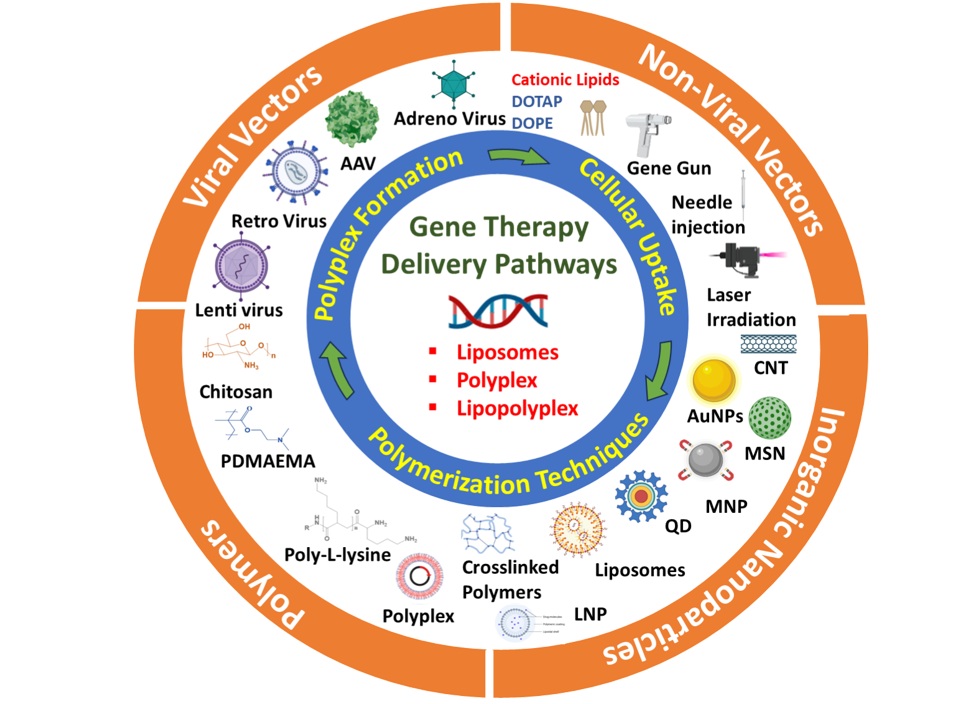
The development of a safe and efficient nucleic acid delivery system remains a major challenge in gene therapy. Viral and non-viral vectors are widely explored: Viral vectors often achieve high transduction efficiency, but are limited by high immunogenicity, oncogenic risk, and complex production processes, whereas non-viral vectors are comparatively safer, easily scalable, and structurally versatile; however, their clinical application is limited by low transfection efficiency. To overcome these challenges, hybrid strategies that combine different non-viral systems have emerged as a prominent approach for safer therapeutic gene delivery. Among these systems, lipid-based and polymer-based cationic systems have been extensively explored due to their tunable chemical structures and high nucleic acid loading capacity, enabling the design of multifunctional cationic systems for efficient and safe delivery. Hence, this review focuses on the synthesis and design of multifunctional cationic systems, highlighting their potential to overcome current barriers in non-viral gene delivery and to advance next-generation therapeutic platforms.
Article Details

This work is licensed under a Creative Commons Attribution 4.0 International License.
How to Cite




Funding data
-
Science and Engineering Research Board
Grant numbers CRG/2021/004203
References
S. Mirón-Barroso, E. B. Domènech, S. Trigueros. Nanotechnology-based strategies to overcome current barriers in gene delivery. Int. J. Mol. Sci., 2021, 22, 8537. https://doi.org/10.3390/ijms22168537. DOI: https://doi.org/10.3390/ijms22168537
C.-K. Chen, P.-K. Huang, W.-C. Law, C.-H. Chu, N.-T. Chen, L.-W. Lo. Biodegradable polymers for gene-delivery applications. Int. J. Nanomedicine, 2020, 15, 2131. https://doi.org/10.2147/IJN.S222419. DOI: https://doi.org/10.2147/IJN.S222419
D. Ibraheem, A. Elaissari, H. Fessi. Gene therapy and DNA delivery systems. Int. J. Pharm., 2014, 459, 70. https://doi.org/10.1016/j.ijpharm.2013.11.041. DOI: https://doi.org/10.1016/j.ijpharm.2013.11.041
S. Ren, M. Wang, C. Wang, Y. Wang, C. Sun, Z. Zeng, H. Cui, X. Zhao. Application of non-viral vectors in drug delivery and gene therapy. Polymers, 2021, 13, 3307. https://doi.org/10.3390/polym13193307. DOI: https://doi.org/10.3390/polym13193307
H. Lv, S. Zhang, B. Wang, S. Cui, J. Yan. Toxicity of cationic lipids and cationic polymers in gene delivery. J. Control. Release. 2006, 114, 100. https://doi.org/10.1016/j.jconrel.2006.04.014. DOI: https://doi.org/10.1016/j.jconrel.2006.04.014
F. Arabi, V. Mansouri, N. Ahmadbeigi. Gene therapy clinical trials, where do we go? An overview. Biomed. Pharmacother., 2022, 153, 113324. https://doi.org/10.1016/j.biopha. DOI: https://doi.org/10.1016/j.biopha.2022.113324
N. Nayerossadat, T. Maedeh, P.A. Ali. Viral and nonviral delivery systems for gene delivery. Adv. Biomed. Res., 2012, 1, 27. https://doi.org/10.4103/2277-9175.98152. DOI: https://doi.org/10.4103/2277-9175.98152
N. Sun, H. Zhao. Transcription activator-like effector nucleases (TALENs): A highly efficient and versatile tool for genome editing. Biotechnol. Bioeng., 2013, 110, 1811. https://doi.org/10.1002/bit.24890. DOI: https://doi.org/10.1002/bit.24890
A.M. Khalil. The genome editing revolution: review. J. Genet. Eng. Biotechnol., 2020, 18, 68. https://doi.org/10.1186/s43141-020-00078-y. DOI: https://doi.org/10.1186/s43141-020-00078-y
Y.K. Kim. RNA therapy: Current status and future potential. Chonnam. Med. J., 2020, 56, 87. https://doi.org/10.4068/cmj.2020.56.2.87. DOI: https://doi.org/10.4068/cmj.2020.56.2.87
X. Zhang, W.T. Godbey. Viral vectors for gene delivery in tissue engineering. Adv. Drug Deliv. Rev., 2006, 58, 515. https://doi.org/10.1016/j.addr.2006.03.006. DOI: https://doi.org/10.1016/j.addr.2006.03.006
R. A. Chithra, O. Elamin, M. S. Karande. Recent and advanced trends in cancer treatments. Natl. J. Community Med., 2024, 15, 1090. https://doi.org/10.55489/njcm.151220244714. DOI: https://doi.org/10.55489/njcm.151220244714
D. Bouard, N. Alazard-Dany, F.-L. Cosset. Viral vectors: From virology to transgene expression. Br. J. Pharmacol., 2009, 157, 153. https://doi.org/10.1038/bjp.2008.349 DOI: https://doi.org/10.1038/bjp.2008.349
J. N. Warnock, C. Daigre, M. Al-Rubeai. Introduction to viral vectors. Methods Mol. Biol., 2011, 737, 1. https://doi.org/10.1007/978-1-61779-095-9_1. DOI: https://doi.org/10.1007/978-1-61779-095-9_1
S. Munier, I. Messai, T. Delair, B. Verrier, Y. Ataman-Onal. Cationic PLA nanoparticles for DNA delivery: Comparison of three surface polycations for DNA binding, protection and transfection properties. Colloids Surf B Biointerfaces, 2005, 43, 163. https://doi.org/10.1016/j.colsurfb.2005.05.001. DOI: https://doi.org/10.1016/j.colsurfb.2005.05.001
S. Tiwari, E. Menghani. Mode of viral and non-viral gene transfer: An overview. IJARET, 2020, 11, 208. https://doi.org/10.34218/IJARET.11.11.2020.018.
S. L. Ginn, I. E. Alexander, M. L. Edelstein, M. R. Abedi, J. Wixon. Gene therapy clinical trials worldwide to 2012 – an update. J. Gene Med., 2013, 15, 2, 65. https://doi.org/10.1002/jgm.2698. DOI: https://doi.org/10.1002/jgm.2698
D. J. Glover, H. J. Lipps, D. A. Jans. Towards safe, non-viral therapeutic gene expression in humans. Nat. Rev. Genet., 2005, 6, 299. https://doi.org/10.1038/nrg1577. DOI: https://doi.org/10.1038/nrg1577
S.-D. Li, L. Huang. Gene therapy progress and prospects: non-viral gene therapy by systemic delivery. Gene Ther., 2006, 13, 1313. https://doi.org/10.1038/sj.gt.3302838. DOI: https://doi.org/10.1038/sj.gt.3302838
A. Pathak, S. Patnaik, K. C. Gupta, Recent trends in non‐viral vector‐mediated gene delivery. Biotechnol. J., 2009, 4, 1559. https://doi.org/10.1002/biot.200900161. DOI: https://doi.org/10.1002/biot.200900161
M. J. Herrero, L. Sendra, A. Miguel, S. F. Aliño. Physical methods of gene delivery, in safety and efficacy of gene-based therapeutics for inherited disorders. Springer Internat. Publ., 2017, 113. https://doi.org/10.1007/978-3-319-53457-2_6. DOI: https://doi.org/10.1007/978-3-319-53457-2_6
P. Hahn, E. Scanlan. Gene delivery into mammalian cells: An overview on existing approaches employed in vitro and in vivo. Top. Curr. Chem., 2010, 296, 1. https://doi.org/10.1007/128_2010_71. DOI: https://doi.org/10.1007/128_2010_71
H. Zu, D. Gao. Non-viral vectors in gene therapy: Recent development, challenges, and prospects. AAPS J., 2021, 23, 1. https://doi.org/10.1208/s12248-021-00608-7. DOI: https://doi.org/10.1208/s12248-021-00608-7
H. Tian, J. Chen, X. Chen. Nanoparticles for gene delivery. Small, 2013, 9, 2034. https://doi.org/10.1002/smll.201202485. DOI: https://doi.org/10.1002/smll.201202485
X. J. Loh, T.-C. Lee, Q. Dou, G. R. Deen, Utilising inorganic nanocarriers for gene delivery. Biomater. Sci., 2016, 4, 70. https://doi.org/10.1039/C5BM00277J. DOI: https://doi.org/10.1039/C5BM00277J
V. Sokolova, M. Epple. Inorganic nanoparticles as carriers of nucleic acids into cells. Angew. Chem. Int. Ed., 2008, 47, 1382. https://doi.org/10.1002/anie.200703039. DOI: https://doi.org/10.1002/anie.200703039
J. Y. Yu, P. Chuesiang, G. H. Shin, H. J. Park. Post-Processing Techniques for the Improvement of Liposome Stability. Pharm., 2021, 13(7), 1023. https://doi.org/10.3390/pharmaceutics13071023. DOI: https://doi.org/10.3390/pharmaceutics13071023
M. Brgles, M. Šantak, B. Halassy, D. Forcic, J. Tomašić. Influence of charge ratio of liposome/DNA complexes on their size after extrusion and transfection efficiency. Int. J. Nanomed., 2012, 393-401. https://doi.org/10.2147/IJN.S27471. DOI: https://doi.org/10.2147/IJN.S27471
C. Vasile. Polymeric Nanomaterials: Recent Developments, Properties and Medical Applications. Polymeric Nanomaterials in Nanotherapeutics, 2019, 1-66. https://doi.org/10.1016/B978-0-12-813932-5.00001-7. DOI: https://doi.org/10.1016/B978-0-12-813932-5.00001-7
D. Rafael, F. Andrade, A. Arranja, S. Luís, M. Videira. Lipoplexes and Polyplexes: Gene Therapy. Encyclopedia of Biomedical Polymers and Polymeric Biomaterials, 2015, 4335–4347. https://doi.org/10.1081/E-EBPP-120050058. DOI: https://doi.org/10.1081/E-EBPP-120050058
W. Chen, H. Li, Z. Liu, W. Yuan. Lipopolyplex for Therapeutic Gene Delivery and Its Application for the Treatment of Parkinson’s Disease. Front. Aging Neurosci., 2016, 8, 68. https://doi.org/10.3389/fnagi.2016.00068. DOI: https://doi.org/10.3389/fnagi.2016.00068
A. Gabelmann, E. Mansouri-Ghahnavieh, M.Koch, P. Shinde, C.A. Guzman, B. Loretrz, C-M Lehr. A novel lipopolyplex platform for dual mRNA delivery via core- and surface-loading. J. Control. Release., 2025, 384, 113875. https://doi.org/10.1016/j.jconrel.2025.113875. DOI: https://doi.org/10.1016/j.jconrel.2025.113875
I. Sanmartín, L. Sendra, I. Moret, M. J. Herrero, S. F. Aliño. Multicompartmental Lipopolyplex as Vehicle for Antigens and Genes Delivery in Vaccine Formulations. Pharm, 2021, 13, 281. https://doi.org/10.3390/pharmaceutics13020281. DOI: https://doi.org/10.3390/pharmaceutics13020281
M. Hofmann-Amtenbrink, D. W. Grainger, H. Hofmann. Nanoparticles in medicine: Current challenges facing inorganic nanoparticle toxicity assessments and standardizations. Nanomedicine: Nanotechnology, Biology and Medicine. 2015, 11, 1689. https://doi.org/10.1016/j.nano.2015.05.005. DOI: https://doi.org/10.1016/j.nano.2015.05.005
G. Unnikrishnan, A. Joy, M. Megha, E. Kolanthai, M. Senthilkumar. Exploration of inorganic nanoparticles for revolutionary drug delivery applications: a critical review. Discover Nano., 2023, 18, 157. https://doi.org/10.1186/s11671-023-03943-0. DOI: https://doi.org/10.1186/s11671-023-03943-0
S. Mehier-Humbert, R. H. Guy. Physical methods for gene transfer: Improving the kinetics of gene delivery into cells. Adv. Drug Deliv. Rev., 2005, 57, 733. https://doi.org/10.1016/j.addr.2004.12.007. DOI: https://doi.org/10.1016/j.addr.2004.12.007
H. M. Prince. Gene transfer: A review of methods and applications. Pathology, 1998, 30, 335. https://doi.org/10.1080/00313029800169606. DOI: https://doi.org/10.1080/00313029800169606
M. Uchida, H. Natsume, D. Kobayashi, K. Sugibayashi, Y. Morimoto. Effects of particle size, helium gas pressure and microparticle dose on the plasma concentration of indomethacin after bombardment of indomethacin-loaded Poly-L-Lactic acid microspheres using a helios gun system. Biol. Pharm. Bull., 2002, 25, 690. https://doi.org/10.1248/bpb.25.690. DOI: https://doi.org/10.1248/bpb.25.690
M. S. Al-Dosari, X. Gao. Nonviral gene delivery: Principle, limitations, and recent progress. AAPS J., 2009, 11, 671. https://doi.org/10.1208/s12248-009-9143-y. DOI: https://doi.org/10.1208/s12248-009-9143-y
D. J. Freeman, R. W. Niven. The influence of sodium glycocholate and other additives on the in vivo transfection of plasmid dna in the lungs. Pharm. Res., 1996, 13, 202. https://doi.org/10.1023/A:1016078728202. DOI: https://doi.org/10.1023/A:1016078728202
E. Neumann, M. Schaefer-Ridder, Y. Wang, P. H. Hofschneider. Gene transfer into mouse lyoma cells by electroporation in high electric fields. EMBO J., 1982, 1, 841. https://doi.org/10.1002/j.1460-2075.1982.tb01257.x. DOI: https://doi.org/10.1002/j.1460-2075.1982.tb01257.x
F. André, L. M. Mir. DNA electrotransfer: Its principles and an updated review of its therapeutic applications. Gene Ther., 2004, 11, S33. https://doi.org/10.1038/sj.gt.3302367. DOI: https://doi.org/10.1038/sj.gt.3302367
H. D. Liang, J. Tang, M. Halliwell. Sonoporation, drug delivery, and gene therapy. Proc. Inst. Mech. Eng. H., 2010, 224, 343. https://doi.org/10.1243/09544119JEIM565. DOI: https://doi.org/10.1243/09544119JEIM565
R. Bekeredjian, P. A. Grayburn, R. V. Shohet. Use of ultrasound contrast agents for gene or drug delivery in cardiovascular medicine. J. Am. Coll. Cardiol., 2005, 45, 329. doi: 10.1016/j.jacc.2004.08.067. DOI: https://doi.org/10.1016/j.jacc.2004.08.067
E. J. Saleh, M. Satari, B. Hajipour-Verdom. Liposome-mediated gene delivery: A comprehensive review of biophysical parameters, lipid composition and targeting strategies. ADMET DMPK, 2025, 14, 3065. https://doi.org/10.5599/admet.3065. DOI: https://doi.org/10.5599/admet.3065
S. Kurata, M. Tsukakoshi, T. Kasuya, Y. Ikawa. The laser method for efficient introduction of foreign DNA into cultured cells. Exp. Cell Res., 1986, 162, 372. https://doi.org/10.1016/0014-4827(86)90342-3. DOI: https://doi.org/10.1016/0014-4827(86)90342-3
K. A. Jinturkar, M. N. Rathi, A. Misra. 3 - Gene Delivery using physical methods in Challenges in delivery of therapeutic genomics and proteomics. Elsevier, 2011, 83. https://doi.org/10.1016/B978-0-12-384964-9.00003-7. DOI: https://doi.org/10.1016/B978-0-12-384964-9.00003-7
V. Budker, G. Zhang, I. Danko, P. Williams, P. Wolff. The efficient expression of intravascularly delivered DNA in rat muscle. Gene Ther., 1998, 5, 272. https://doi.org/10.1038/sj.gt.3300572. DOI: https://doi.org/10.1038/sj.gt.3300572
P. L. Felgner, T. R. Gadek, M. Holm, R. Roman, H. W. Chan, M. Wenz, J. P. Northrop, G. M. Ringold, M. Danielsen. Lipofection: A highly efficient, lipid-mediated DNA-transfection procedure. Proc. Natl. Acad. Sci., 1987, 84, 7413. https://doi.org/10.1073/pnas.84.21.7413. DOI: https://doi.org/10.1073/pnas.84.21.7413
F. Ponti, M. Campolungo, C. Melchiori, N. Bano, G. Candiani. Cationic lipids for gene delivery: many players, one goal. Chem. Phys. Lipids., 2021, 235, 105032. https://doi.org/10.1016/j.chemphyslip.2020.105032. DOI: https://doi.org/10.1016/j.chemphyslip.2020.105032
L. Wasungu, D. Hoekstra. Cationic lipids, lipoplexes and intracellular delivery of genes. J. Control. Release, 2006, 116, 255. https://doi.org/10.1016/j.jconrel.2006.06.024. DOI: https://doi.org/10.1016/j.jconrel.2006.06.024
D. Zhi, Y. Bai, J. Yang, S. Cui, Y. Zhao, H.Chen, S. Zhang. A review on cationic lipids with different linkers for gene delivery. Adv. Colloid Interface Sci., 2018, 253, 117. https://doi.org/10.1016/j.cis.2017.12.006. DOI: https://doi.org/10.1016/j.cis.2017.12.006
R. Leventis, J. R. Silvius. Interactions of mammalian cells with lipid dispersions containing novel metabolizable cationic amphiphiles. Biochim. Biophys. Acta - Biomembr., 1990, 1023, 124. https://doi.org/10.1016/0005-2736(90)90017-I. DOI: https://doi.org/10.1016/0005-2736(90)90017-I
J. Ju, M. L. Huan, N. Wan, H. Qiu, S. Y. Zhou, B. L. Zhang. Novel cholesterol-based cationic lipids as transfecting agents of DNA for efficient gene delivery. Int. J. Mol. Sci., 2015, 16, 5666. https://doi.org/10.3390/ijms16035666. DOI: https://doi.org/10.3390/ijms16035666
J. Ju, M. L. Huan, N. Wan, Y. L. Hou, X. X. Ma, Y. Y. Jia, C. Li, S. Y. Zhou, B. L. Zhang. Cholesterol derived cationic lipids as potential non-viral gene delivery vectors and their serum compatibility. Bioorg. Med. Chem. Lett., 2016, 26, 2401. https://doi.org/10.1016/j.bmcl.2016.04.007. DOI: https://doi.org/10.1016/j.bmcl.2016.04.007
D. Chang, Y. Zhang, J. Zhang, Y. Liu, X. Yu. Cationic lipids with a cyclen headgroup: Synthesis and structure-activity relationship studies as non-viral gene vectors. 2017, 7, 18681. https://doi.org/10.1039/c7ra00422b. DOI: https://doi.org/10.1039/C7RA00422B
M. Mével, N. Kamaly, S. Carmona, M. H. Oliver, M. R. Jorgensen, C. Crowther, F. H. Salazar, P. L. Marion, M. Fujino, Y. Natori, M. Thanou, P. Arbuthnot, J. J. Yaouanc, P. A. Jaffrès, A. D. Miller. DODAG; A versatile new cationic lipid that mediates efficient delivery of pDNA and siRNA. J. Control. Release, 2010, 143, 222. https://doi.org/10.1016/j.jconrel.2009.12.001. DOI: https://doi.org/10.1016/j.jconrel.2009.12.001
J. Zhang, X. Yang, Z. Chang, W. Zhu, Y. Ma, H. He. Polymeric nanocarriers for therapeutic gene delivery. Asian J. Pharm. Sci., 2025, 20, 101015. https://doi.org/10.1016/j.ajps.2025.101015. DOI: https://doi.org/10.1016/j.ajps.2025.101015
X. Guan, J. Chen, Y. Hu, L. Lin, P. Sun, H. Tian, X. Chen. Highly enhanced cancer immunotherapy by combining nanovaccine with hyaluronidase. Biomaterials, 2018, 171, 198. https://doi.org/10.1016/j.biomaterials.2018.04.039. DOI: https://doi.org/10.1016/j.biomaterials.2018.04.039
J. S. Pagano, A. Vaheri, Enhancement of infectivity of poliovirus RNA with diethylaminoethyl-dextran (DEAE-D). Arch. Virol., 1965, 17, 456. https://doi.org/10.1007/BF01241201. DOI: https://doi.org/10.1007/BF01241201
J. H. Jeong, S. W. Kim, T. G. Park. Molecular design of functional polymers for gene therapy. Prog. Polym. Sci., 2007, 32, 1239. https://doi.org/10.1016/j.progpolymsci.2007.05.019. DOI: https://doi.org/10.1016/j.progpolymsci.2007.05.019
M. Farshbaf, S. Davaran, A. Zarebkohan, N. Annabi, A. Akbarzadeh, R. Salehi. Significant role of cationic polymers in drug delivery systems. Artif. Cells. Nanomed. Biotechnol., 2018, 46, 1872. https://doi.org/10.1080/21691401.2017.1395344.
X. Wang, D. Niu, C. Hu, P. Li. Polyethyleneimine-based nanocarriers for gene delivery. Curr. Pharm. Des., 2015, 21, 6140. https://doi.org/10.2174/1381612821666151027152907. DOI: https://doi.org/10.2174/1381612821666151027152907
S. Taranejoo, J. Liu, P. Verma, K. Hourigan. A review of the developments of characteristics of PEI derivatives for gene delivery applications. J. Appl. Polym. Sci., 2015, 132, 42096. https://doi.org/10.1002/app.42096. DOI: https://doi.org/10.1002/app.42096
A. P. Pandey, K. K. Sawant. Polyethylenimine: A versatile, multifunctional non-viral vector for nucleic acid delivery. Mater. Sci. Eng., C., 2016, 68, 904. https://doi.org/10.1016/j.msec.2016.07.066 DOI: https://doi.org/10.1016/j.msec.2016.07.066
J. Y. Cherng, H. Talsma, R. Verrijk, D. J. Crommelin, and W. Hennink. The effect of formulation parameters on the size of poly((2-dimethylamino)ethyl methacrylate)-plasmid complexes. Eur. J. Pharm. Biopharm., 1999, 47, 215. https://doi.org/10.1016/S0939-6411(98)00103-9. DOI: https://doi.org/10.1016/S0939-6411(98)00103-9
A. Skandalis, D. Selianitis, S. Pispas. PnBA-b-PNIPAM-b-PDMAEA thermo-responsive triblock terpolymers and their quaternized analogs as gene and drug delivery vectors, Polym., 2021, 13, 2361. doi: https://doi.org/10.3390/polym13142361. DOI: https://doi.org/10.3390/polym13142361
D. S. H. Chu, J. G. Schellinger, J. Shi, A. J. Convertine, P. S. Stayton, S. H. Pun. Application of Living Free Radical Polymerization for Nucleic Acid Delivery. Acc. Chem. Res., 2012, 45, 1089. https://doi.org/10.1021/ar200242z. DOI: https://doi.org/10.1021/ar200242z
M. K. Hyat, A. Hassan, I. Sajid, R. Das, S. Zhou, A. Irfan, M. Shahid, R. Begum, Z. H. Farooqi. Poly(N,N-dimethylaminoethyl methacrylate) based microgels and hybrid microgels: Design, synthesis, properties and applications. React. Funct. Polym., 2026, 225, 106777. https://doi.org/10.1016/j.reactfunctpolym.2026.106777. DOI: https://doi.org/10.1016/j.reactfunctpolym.2026.106777
P. Symonds, J. C. Murray, A. C. Hunter, G. Debska, A. Szewczyk, and S. M. Moghimi. Low and high molecular weight poly(l-lysine)s/poly(l-lysine)–DNA complexes initiate mitochondrial-mediated apoptosis differently. FEBS Lett., 2005, 579, 6191. https://doi.org/10.1016/j.febslet.2005.09.092. DOI: https://doi.org/10.1016/j.febslet.2005.09.092
T. Yoshida, T. Nagasawa. ε-Poly-l-lysine: microbial production, biodegradation and application potential. Appl. Microbiol. Biotechnol., 2003, 62, 21. https://doi.org/10.1007/s00253-003-1312-9. DOI: https://doi.org/10.1007/s00253-003-1312-9
Y. Liu, Y. Li, D. Keskin, L. Shi. Poly(β‐Amino Esters): Synthesis, formulations, and their biomedical applications. Adv. Healthcare Mater., 2019, 8, 1801359. https://doi.org/10.1002/adhm.201801359. DOI: https://doi.org/10.1002/adhm.201801359
J. Wei, L. Zhu, Q. Lu, G. Li, Y. Zhou, Y. Yang, L. Zhang. Recent progress and applications of poly(beta amino esters)-based biomaterials. J. Controlled Release, 2023, 354, 337. https://doi.org/10.1016/j.jconrel.2023.01.002. DOI: https://doi.org/10.1016/j.jconrel.2023.01.002
J. Karlsson, K. R. Rhodes, J. J. Green, S. Y. Tzeng. Poly(beta-amino ester)s as gene delivery vehicles: challenges and opportunities. Expert Opin. Drug Deliv., 2020, 17, 1395. https://doi.org/10.1080/17425247.2020.1796628. DOI: https://doi.org/10.1080/17425247.2020.1796628
R. K. Oskuee, E. Mohtashami, L. Golami, B. Malaekeh-Nikouei. Cationic liposomes-polyallylamine-plasmid nanocomplexes for gene delivery. J. Exp. Nanosci., 2014, 9, 1026. https://doi.org/10.1080/17458080.2013.771245. DOI: https://doi.org/10.1080/17458080.2013.771245
L. Gholami, A. Mahmoudi, R. Kazemi Oskuee, B. Malaekeh-Nikouei. An overview of polyallylamine applications in gene delivery. Pharm. Dev. Technol., 2022, 27, 714. https://doi.org/10.1080/10837450.2022.2107014. DOI: https://doi.org/10.1080/10837450.2022.2107014
P. Baldrick. The safety of chitosan as a pharmaceutical excipient. Regul. Toxicol. Pharmacol., 2010, 56, 290. doi: 10.1016/j.yrtph.2009.09.015. DOI: https://doi.org/10.1016/j.yrtph.2009.09.015
S. Kou, L. M. Peters, M. R. Mucalo. Chitosan: A review of sources and preparation methods, Int. J. Biol. Macromol., 2021 169, 85. https://doi.org/10.1016/j.ijbiomac.2020.12.005. DOI: https://doi.org/10.1016/j.ijbiomac.2020.12.005
B. D. S. Rodrigues, S. Lakkadwala, D. Sharma, J. Singh. Chitosan for gene, DNA vaccines, and drug delivery. Mater. Biomed. Eng., 2019, 515. https://doi.org/10.1016/B978-0-12-818433-2.00015-7. DOI: https://doi.org/10.1016/B978-0-12-818433-2.00015-7
Z. Shariatinia. Pharmaceutical applications of chitosan. Adv. Colloid. Interface Sci., 2019, 263, 131. https://doi.org/10.1016/j.cis.2018.11.008. DOI: https://doi.org/10.1016/j.cis.2018.11.008
A. Kushwaha. Gene Delivery Using Polymeric Vectors : Review Article. IJRAR, 2018, 5, 165.
I. Aranaz, A. R. Alcantara, M. C. Civera, C. Arias, B. Elorza, A. H. Caballero, N. Acosta. Chitosan: An Overview of Its Properties and Applications. Polymers, 2021, 13, 3256. https://doi.org/10.3390/polym13193256. DOI: https://doi.org/10.3390/polym13193256
A. Gottipati, L. Chelvarajan, H. Peng, R. Kong, C. F. Cahall, C. Li, H. Tripathi, A. Al-Darraji, S. Ye, E. Elsawalhy, A. A. Latif, B. J. Berron. Gelatin-based polymer cell coating improves bone marrow-derived cell retention in the heart after myocardial infarction, Stem Cell Rev. Rep., 2019, 15, 404. https://doi.org/10.1007/s12015-018-9870-5. DOI: https://doi.org/10.1007/s12015-018-9870-5
R. Mishra, R. Varshney, N. Das, D. Sircar, P. Roy. Synthesis and characterization of gelatin-PVP polymer composite scaffold for potential application in bone tissue engineering. Eur. Polym. J., 2019, 119, 155. https://doi.org/10.1016/j.eurpolymj.2019.07.007. DOI: https://doi.org/10.1016/j.eurpolymj.2019.07.007
M. C. Echave, R. H Moya, L. Iturriaga, J. L. Pedraz, R. Lakshminarayanan, A. D. Pirouz, N. Taebnia, G. Orive. Recent advances in gelatin-based therapeutics, Expert Opin. Biol. Ther., 2019, 19, 773. https://doi.org/10.1080/14712598.2019.1610383. DOI: https://doi.org/10.1080/14712598.2019.1610383
J. A. Rather, N. Akhter, Q. S. Ashraf, S. A. Mir, H. A. Makroo, D. Majid, F. J. Barba, A. M. Khaneghah, B. N. Dar. A comprehensive review on gelatin: Understanding impact of the sources, extraction methods, and modifications on potential packaging applications. Food Packag. Shelf Life., 2022, 34, 100945. https://doi.org/10.1016/j.fpsl.2022.100945. DOI: https://doi.org/10.1016/j.fpsl.2022.100945
A. Banerjee, R. Bandopadhyay. Use of dextran nanoparticle: A paradigm shift in bacterial exopolysaccharide-based biomedical applications. Int. J. Biol. Macromol., 2016, 87, 295. https://doi.org/10.1016/j.ijbiomac.2016.02.059. DOI: https://doi.org/10.1016/j.ijbiomac.2016.02.059
E. Díaz-Montes. Dextran: Sources, structures, and properties. Polysaccharides, 2021, 2, 554. https://doi.org/10.3390/polysaccharides2030033. DOI: https://doi.org/10.3390/polysaccharides2030033
P. R. Wich, J. M. J. Fréchet. Degradable Dextran Particles for Gene Delivery Applications. Aust. J. Chem., 2012, 65, 15. https://doi.org/10.1071/CH11370 DOI: https://doi.org/10.1071/CH11370
F. Chen, G. Huang, H. Huang. Preparation and application of dextran and its derivatives as carriers. Int. J. Biol. Macromol., 2020, 145, 827. https://doi.org/10.1016/j.ijbiomac.2019.11.151. DOI: https://doi.org/10.1016/j.ijbiomac.2019.11.151
J. Zhang, P. Zhan, H. Tian. Recent updates in the polysaccharides-based Nano-biocarriers for drugs delivery and its application in diseases treatment: A review. Int. J. Biol. Macromol., 2021, 182, 115. https://doi.org/10.1016/j.ijbiomac.2021.04.009. DOI: https://doi.org/10.1016/j.ijbiomac.2021.04.009
M. Ioelovich. Cellulose as a nanostructured polymer: A short review. BioResources, 2008, 3, 1403. https://doi.org/10.15376/biores.3.4.ioelovich. DOI: https://doi.org/10.15376/biores.3.4.1403-1418
E. Marinho. Cellulose: A comprehensive review of its properties and applications. Sustain. Chem. Environ., 2025, 11, 100283. https://doi.org/10.1016/j.scenv.2025.100283. DOI: https://doi.org/10.1016/j.scenv.2025.100283
A. Masek, A. Kosmalska. Technological limitations in obtaining and using cellulose biocomposites. Front. Bioeng. Biotechnol., 2022, 10, 1. https://doi.org/10.3389/fbioe.2022.912052. DOI: https://doi.org/10.3389/fbioe.2022.912052
D. Schermant, B. Demeneixt, J. Behr. A versatile vector for gene and oligonucleotide transfer into cells in culture and in vivo: Polyethylenimine. Proc. Natl. Acad. Sci., 1995, 92, 7297. https://doi.org/10.1073/pnas.92.16.7297. DOI: https://doi.org/10.1073/pnas.92.16.7297
U. Rungsardthong, M. Deshpande, L. Bailey, M. Vamvakaki, S. P. Armes, M. C. Garnett, S. Stolnik. Copolymers of amine methacrylate with poly(ethylene glycol) as vectors for gene therapy. J. Control. Release., 2001, 73, 359. https://doi.org/10.1016/S0168-3659(01)00295-4. DOI: https://doi.org/10.1016/S0168-3659(01)00295-4
G. Moad, B. E. Rizzardo, S. H. T. A, Living Radical Polymerization by the RAFT Process – A Second Update. Aust. J. Chem., 2009, 62, 1402. https://doi.org/10.1071/CH09311. DOI: https://doi.org/10.1071/CH09311
K. Parkatzidis, H. S. Wang, N. P. Truong, A. Anastasaki. Recent developments and future challenges in controlled radical polymerization: A 2020 update. Chem., 2020, 6, 1575. https://doi.org/10.1016/j.chempr.2020.06.014. DOI: https://doi.org/10.1016/j.chempr.2020.06.014
G. Moad, E. Rizzardo, S. H. Thang. Living radical polymerization by the RAFT process a third update. Aust. J. Chem., 2012, 65, 985. https://doi.org/10.1071/CH12295. DOI: https://doi.org/10.1071/CH12295
K. Matyjaszewski, J. Xia. Atom transfer radical polymerization. Chem. Rev., 2001, 101, 2921. https://doi.org/10.1021/cr940534g. DOI: https://doi.org/10.1021/cr940534g
C. J. Hawker, A. W. Bosman, E. Harth. New polymer synthesis by nitroxide mediated living radical polymerizations. Chem. Rev., 2001, 101, 3661. https://doi.org/10.1021/cr990119u. DOI: https://doi.org/10.1021/cr990119u
X. Jun, S. Jie, Y. Ting, and H. Teng. Co-delivery of drug and DNA from cationic dual-responsive micelles derived from poly(DMAEMA-co-PPGMA). Mater. Sci. Eng., C, 2013, 33, 4545. https://doi.org/10.1016/j.msec.2013.07.011. DOI: https://doi.org/10.1016/j.msec.2013.07.011
K. Matyjaszewski, Atom Transfer Radical Polymerization (ATRP): Current status and future perspectives. Macromol., 2012, 45, 4015. https://doi.org/10.1021/ma3001719. DOI: https://doi.org/10.1021/ma3001719
F. Di Lena, K. Matyjaszewski. Transition metal catalysts for controlled radical polymerization. Prog. Polym. Sci., 2010, 35, 959. https://doi.org/10.1016/j.progpolymsci.2010.05.001. DOI: https://doi.org/10.1016/j.progpolymsci.2010.05.001
S. Maji, F. Mitschang, L. Chen, Q. Jin, Y. Wang, S. Agarwal. Functional poly(dimethyl aminoethyl methacrylate) by combination of radical ring-opening polymerization and click chemistry for biomedical applications. Macromol. Chem. Phys., 2012, 213, 1643. https://doi.org/10.1002/macp.201200220. DOI: https://doi.org/10.1002/macp.201200220
Y. Zhang, M. Zheng, T. Kissel, S. Agarwal. Design and Biophysical characterization of bioresponsive degradable poly(dimethylaminoethyl methacrylate) based polymers for in vitro DNA transfection. Biomacromolecules. 2012, 13, 313-322. https://doi.org/10.1021/bm2015174. DOI: https://doi.org/10.1021/bm2015174
O. Paecharoenchai, N. Niyomtham, A. Apirakaramwong, T. Ngawhirunpat,T. Rojanarata, B. E. Yingyongnarongkul, P. Opanasopit. Structure relationship of cationic lipids on gene transfection mediated by cationic liposomes. AAPS. Pharm. Sci. Tech., 2012, 13, 13028. https://doi.org/10.1208/s12249-012-9857-5. DOI: https://doi.org/10.1208/s12249-012-9857-5
A. P. Rajendran, O. Ogundana, L. C. Morales, D. N. M. Sundaram, C. Kucharski, Kc Remant, H. Uludağ. Transfection efficacy and cellular uptake of lipid-modified polyethyleneimine derivatives for anionic nanoparticles as gene delivery vectors. ACS Appl. Bio. Mater., 2023, 20, 1105. https://doi.org/10.1021/acsabm.2c00978 DOI: https://doi.org/10.1021/acsabm.2c00978
Z. Wang, S. Jingjing, MLi, T. Luo, S. Yulin, A. Cao, R. Sheng. Natural steroid-based cationic copolymers cholesterol/diosgenin-r-PDMAEMAs and their pDNA nanoplexes: impact of steroid structures and hydrophobic/hydrophilic ratios on pDNA delivery. RSC Adv., 2021 11, 19450. https://doi.org/10.1039/d1ra00223f. DOI: https://doi.org/10.1039/D1RA00223F
P. P. Mapfumo, L. S. Reichel, S. Hoeppener, A. Traeger. Improving gene delivery: Synergy between alkyl chain length and lipoic acid for PDMAEMA hydrophobic copolymers. Macromol. Rapid Commun., 2024, 45, 2300649. https://doi.org/10.1002/marc.202300649. DOI: https://doi.org/10.1002/marc.202300649
A. J. Butzelaar, S. Schneider, E. Molle, P. Theato, Synthesis and post‐polymerization modification of defined functional poly(vinyl ether)s, Macromol. Rapid Commun., 2021, 42, 2100133. https://doi.org/10.1002/marc.202100133. DOI: https://doi.org/10.1002/marc.202100133
M. A. Gauthier, M. I. Gibson, H. A. Klok. Synthesis of functional polymers by post-polymerization modification. Angew. Chem. Int. Ed., 2009, 48, 48. https://doi.org/10.1002/anie.200801951. DOI: https://doi.org/10.1002/anie.200801951
L. J. C. Albuquerque, F. A. de Oliveira, M. A. Christoffolete, M. Nascimento-Sales, S. Berger, E. Wagner, U. Lächelt, F. C. Giacomelli. Nucleic acid delivery to retinal cells using lipopeptides as a potential tool towards ocular gene therapies. J. Colloid Interface Sci., 2024, 655, 346. https://doi.org/10.1016/j.jcis.2023.11.003 DOI: https://doi.org/10.1016/j.jcis.2023.11.003
M. Rezaee, R. Kazemi, H. Nassirli, B. Malaekeh-nikouei. Progress in the development of lipopolyplexes as efficient non-viral gene delivery systems. J. Control. Release, 2016, 236, 1. https://doi.org/10.1016/j.jconrel.2016.06.023. DOI: https://doi.org/10.1016/j.jconrel.2016.06.023
R. Bofinger, M. Zaw-Thin, N. J. Mitchell, P. S. Patrick, C. Stowe, A. Gomez-Ramirez, H. C. Hailes, T. L. Kalber, A. B. Tabor. Development of lipopolyplexes for gene delivery: A comparison of the effects of differing modes of targeting peptide display on the structure and transfection activities of lipopolyplexes. J. Pept. Sci., 2018, 24, e3131. https://doi.org/10.1002/psc.3131. DOI: https://doi.org/10.1002/psc.3131
F. Liu, L. Huang. Electric gene transfer to the liver following systemic administration of plasmid DNA. Gene Ther., 2002, 9, 1116. https://doi.org/10.1038/sj.gt.3301733. DOI: https://doi.org/10.1038/sj.gt.3301733
S. Persano, M. L. Guevara, Z. Li, J. Mai, M. Ferrari, P. P. Pompa, H. Shen. Lipopolyplex potentiates anti-tumor immunity of mRNA-based vaccination. Biomaterials, 2017, 125, 81. https://doi.org/10.1016/j.biomaterials.2017.02.019. DOI: https://doi.org/10.1016/j.biomaterials.2017.02.019
H. Yun, K. Wang, J. Zhang, G. Peng, H. Zhao. Construction of peptide-lipoic acid cationic polymers with redox responsiveness and low toxicity for gene delivery. ACS Omega, 2023, 9, 3499. https://doi.org/10.1021/acsomega.3c07194. DOI: https://doi.org/10.1021/acsomega.3c07194
M. -W. Hei, Y. -R. Zhan, P. Chen, R. -M. Zhao, X. -L. Tian, X. -Q. Yu, J. Zhang. Lipoic acid-based poly(disulfide)s as versatile biomolecule delivery vectors and the application in tumor immunotherapy. Mol. Pharm., 2023, 20, 3210. https://doi.org/10.1021/acs.molpharmaceut.3c00231. DOI: https://doi.org/10.1021/acs.molpharmaceut.3c00231
D. P. Walsh, A. Heise, F. J. O’Brien, S. A. Cryan, An efficient, non-viral dendritic vector for gene delivery in tissue engineering. Gene Ther., 2017, 24, 681. https://doi.org/10.1038/gt.2017.58. DOI: https://doi.org/10.1038/gt.2017.58
N. Sikhosana, L. C. du Toit, P. N. Fru, P. Walvekar, Y. E. Choonara. In vitro evaluation of a cationic polymer-lipid conjugate as a potential nanosystem for gene delivery. Int. J. Pharm., 2026, 692, 126641. https://doi.org/10.1016/j.ijpharm.2026.126641. DOI: https://doi.org/10.1016/j.ijpharm.2026.126641
C. Pegoraro, E. M. Sanchis, S. Đorđević, I. Dolz-Pérez, C. Huck-Iriart, L. Herrera, S. Esteban-Pérez, I. Conejos-Sanchez, M. J. Vicent. Multifunctional polypeptide-based nanoconjugates for targeted mitochondrial delivery and nonviral gene therapy. Chem. Mater., 2025, 37, 1457. https://doi.org/10.1021/acs.chemmater.4c02742. DOI: https://doi.org/10.1021/acs.chemmater.4c02742
F. Tabesh, G. Haghverdi, K. P. Devarakonda, T. F. Massoud, R. Paulmurugan. Synthesis, characterization, and application of a biocompatible gene delivery nanocarrier constructed from gold nanostars and a chitosan–cyclodextrin–poly(ethylene imine) graft polymer. Mater. Adv., 2024, 5, 8007. https://doi.org/10.1039/d4ma00433g. DOI: https://doi.org/10.1039/D4MA00433G
U. S Kumar, R. Afjei, K. Ferrara, T. F. Massoud, R. Paulmurugan. Gold-nanostar-chitosan-mediated delivery of SARS-CoV-2 DNA vaccine for respiratory mucosal immunization: development and proof-of-principle. ACS Nano, 2021, 15, 17582. https://doi.org/10.1021/acsnano.1c05002. DOI: https://doi.org/10.1021/acsnano.1c05002
P. Yin, H. Li, C. Ke, G. Cao, X. Xin, J. Hu, X. Cai, L. Li, X. Liu, B. Du. Intranasal delivery of immunotherapeutic nanoformulations for treatment of glioma through in situ activation of immune response. Int. J. Nanomedicine, 2020, 6, 1499. https://doi.org/10.2147/IJN.S240551. DOI: https://doi.org/10.2147/IJN.S240551
Y. Luo, Y. Wang, Y. Chen, B. Li, T. Yang, X. Zhao, P. Ding. Development and evaluation of a novel biodegradable poly(amidoamine) with bis(guanidinium) and benzene ring structures for enhanced gene delivery. J. Drug Deliv. Sci. Technol., 2025, 104, 106452. https://doi.org/10.1016/j.jddst.2024.106452. DOI: https://doi.org/10.1016/j.jddst.2024.106452
J. Chen, F. Li, B. Zhao, J. Gu, N. M. Brejcha, M. Bartoli, W. Zhang, Y. Zhou, S. Fu, J. B. Domena, A. Zafar, F. Zhang, A. Tagliaferro, F. Verde, F. Zhang, Y. Zhang, R. M. Leblanc. Gene transfection efficiency improvement with lipid conjugated cationic carbon dots. 2024, 16, 27087. https://doi.org/10.1021/acsami.4c02614. DOI: https://doi.org/10.1021/acsami.4c02614
S. A. Salunkhe, K. Bajaj, A. Mittal. Biomaterials advances cationic lipid-polymer hybrid carrier for delivery of miRNA and peptides. 2025 173, 214284. https://doi.org/10.1016/j.bioadv.2025.214284. DOI: https://doi.org/10.1016/j.bioadv.2025.214284
X. Bai, J. Nie, S. Cheng, D. Sheng, J. Xiao, W. Dong. Biocompatible fluorinated poly(2-hydroxypropenimine)s for safe and efficient gene transfection. Colloids Surf. A Physicochem. Eng. Asp., 2025, 705, 135575. https://doi.org/10.1016/j.colsurfa.2024.135575. DOI: https://doi.org/10.1016/j.colsurfa.2024.135575
T. Fielitz, C. Raab, V. Tkachenko, K. M. Oleszkiewicz, H. Fuchs, M. Hartlieb. Copolymers of NVAm and NVP for efficient gene delivery. ACS Polym. Au, 2026, 6, 426. https://doi.org/10.1021/acspolymersau.5c00167. DOI: https://doi.org/10.1021/acspolymersau.5c00167
M. Farshbaf, S. Davaran, A. Zarebkohan, N. Annabi, A. Akbarzadeh, R. Salehi. Significant role of cationic polymers in drug delivery systems. Artif. Cell Nanomed. Biotechnol., 2018, 46, 1872. https://doi.org/10.1080/21691401.2017.1395344. DOI: https://doi.org/10.1080/21691401.2017.1395344
Z. Y. Turban, M. Savas, A. Alakbarov, V. Bulmus. Design strategies to optimize polymeric vectors for mRNA delivery. J. Macromol. Sci., Pure Appl. Chem., 2025, 62, 1103. https://doi.org/10.1080/10601325.2025.2587806. DOI: https://doi.org/10.1080/10601325.2025.2587806
Y. Li, R. Tian, J. Xu, Y. Zou, T. Wang, J. Liu. Recent developments of polymeric delivery systems in gene therapeutics. Polym. Chem., 2024, 15, 1908. https://doi.org/10.1039/d4py00124a. DOI: https://doi.org/10.1039/D4PY00124A
M. Roursgaard, K. B. Knudsen, H. Northeved, M. Persson, T. Christensen, P. E. K. Kumar, A. Permin, T. L. Andresen, T. Gjetting, J. Lykkesfeldt, L. K. Vesterdal, S. Loft, P. Møller. In vitro toxicity of cationic micelles and liposomes in cultured human hepatocyte (HepG2) and lung epithelial (A549) cell lines. Toxicol. In Vitro., 2016, 36, 164. https://doi.org/10.1016/j.tiv.2016.08.002. DOI: https://doi.org/10.1016/j.tiv.2016.08.002
K. B. Knudsen, H. Northeved, P. Kumar EK, A. Permin, T. Gjetting, T. L. Andresen, S. Larsen, K. M. Wegener, J. Lykkesfeldt, K. Jantzen, S. Loft, P. Møller, M. Roursgaard. In vivo toxicity of cationic micelles and liposomes. Nanomedicine: NBM, 2015, 11, 467. https://doi.org/10.1016/j.nano.2014.08.004. DOI: https://doi.org/10.1016/j.nano.2014.08.004
J. E. Zuckerman, M. E. Davis. Clinical experiences with systemically administered siRNA-based therapeutics in cancer. Nat. Rev. Drug Discov., 2015, 14, 843. https://doi.org/10.1038/nrd4685. DOI: https://doi.org/10.1038/nrd4685
Y. Li, X. Wang, Z. He, M. Johnson, Sigen A, I. Lara-Sáez, J. Lyu, W. Wang. 3D Macrocyclic structure boosted gene delivery: Multicyclic poly(β-Amino Ester)s from step growth polymerization. J. Am. Chem. Soc., 2023, 145, 17187. https://doi.org/10.1021/jacs.3c04191. DOI: https://doi.org/10.1021/jacs.3c04191
H. Liu, Y. Wang, M. Wang, J. Xiao, Y. Cheng. Biomaterials fluorinated poly(propylenimine) dendrimers as gene vectors. Biomaterials, 2014, 35, 5407. https://doi.org/10.1016/j.biomaterials.2014.03.040. DOI: https://doi.org/10.1016/j.biomaterials.2014.03.040
H. Zeng, Y. Zhang, N. Liu, Q. Wei, F. Yang, J. Li. Stimulus-Responsive Nanodelivery and Release Systems for Cancer Gene Therapy: Efficacy Improvement Strategies. Int. J. Nanomedicine., 2024, 19, 7099. https://doi.org/10.2147/IJN.S470637. DOI: https://doi.org/10.2147/IJN.S470637
Q. Zhang, G. Kuang, W. Li, J. Wang, H. Ren, Y. Zhao. Stimuli-Responsive Gene Delivery Nanocarriers for Cancer Therapy. Nano-Micro Letters, 2023, 15, 44. https://doi.org/10.1007/s40820-023-01018-4. DOI: https://doi.org/10.1007/s40820-023-01018-4
A. Kausar. Poly(N-vinylcaprolactam) based materials and nanocomposites: stimuli responsive characteristics and applications. J. Macromol. Sci., Pure Appl. Chem., 2025, 62, 469. https://doi.org/10.1080/10601325.2025.2505874. DOI: https://doi.org/10.1080/10601325.2025.2505874
M. J. Mitchell, M. M. Billingsley, R. M. Haley, R. Langer, M. E. Wechsler, N. A. Peppas. Engineering precision nanoparticles. Nat. Rev. Drug Discov., 2021, 20, 101. https://doi.org/10.1038/s41573-020-0090-8. DOI: https://doi.org/10.1038/s41573-020-0090-8
D. A. Fletcher, R. D. Mullins. Cell mechanics and the cytoskeleton. Nature, 2010, 463, 485. https://doi.org/10.1038/nature08908. DOI: https://doi.org/10.1038/nature08908
D. E. Jaalouk, J. Lammerding. Mechanotransduction gone awry. Nat. Rev. Mol. Cell Biol., 2009, 10, 63. https://doi.org/10.1038/nrm2597. DOI: https://doi.org/10.1038/nrm2597
J. D. Humphrey, M. A. Schwartz, G. Tellides, D. M. Milewicz. Role of mechanotransduction in vascular biology: Focus on thoracic aortic aneurysms and dissections. Circ Res., 2015, 116, 1448. https://doi.org/10.1161/CIRCRESAHA.114.30493. DOI: https://doi.org/10.1161/CIRCRESAHA.114.304936
D. Gong, E. Ben-Akiva, A. Singh, H. Yamagata, S. Est-Witte, J. K. Shade, N. A. Trayanova, J. J. Green. Machine learning guided structure function predictions enable in silico nanoparticle screening for polymeric gene delivery. Acta Biomater., 2022, 154, 349. https://doi.org/10.1016/j.actbio.2022.09.072. DOI: https://doi.org/10.1016/j.actbio.2022.09.072
Y. Li, Z. He, Sigen A, X. Wang, Z. Li, M. Johnson, R. Foley, I. L. Sáez, J. Lyu, W. Wang. Artificial Intelligence (ai)-aided structure optimization for enhanced gene delivery: The effect of the polymer component distribution (PCD), ACS Appl. Mater. Interfaces, 2023, 15, 36667. https://doi.org/10.1021/acsami.3c05010. DOI: https://doi.org/10.1021/acsami.3c05010
Y. Zhu, Z. Yu, R. Liu, Y. Jin, Q. Shi, Y. Wu. Recent advances in green cationic polymerization. J. Polym. Sci., 2024, 62, 2549. https://doi.org/10.1002/pol.20230971. DOI: https://doi.org/10.1002/pol.20230971
G. Yang, S. Duan, F. J. Xu. Cationic Polymers and Their Applications. Antimicrobial Materials and Interfaces: Synthesis, Characterization and Applications, 2025, 2, 1. https://doi.org/10.1002/9783527846979.ch01. DOI: https://doi.org/10.1002/9783527846979.ch01
B. Zhao, Z. Gao, Y. Zheng, C. Gao. Scalable Synthesis of Positively Charged Sequence-Defined Functional Polymers. J. Am. Chem. Soc., 2019, 141, 4541. https://doi.org/10.1021/jacs.9b00172. DOI: https://doi.org/10.1021/jacs.9b00172
I. Porello, N. Bono, G. Candiani, F. Cellesi. Advancing nucleic acid delivery through cationic polymer design: non-cationic building blocks from the toolbox. Polym. Chem., 2024, 15, 2800. https://doi.org/10.1039/D4PY00234B. DOI: https://doi.org/10.1039/D4PY00234B
J. Cuthbert, S. V. Wanasinghe, K. Matyjaszewski, D. Konkolewicz. Are RAFT and ATRP universally interchangeable polymerization methods in network formation?. Macromolecules, 2021, 54, 8331. https://doi.org/10.1021/acs.macromol.1c01587. DOI: https://doi.org/10.1021/acs.macromol.1c01587